Bass Coast: Radical Care and Harm Reduction Led by Stacey Forrester
Short bio about the festival:
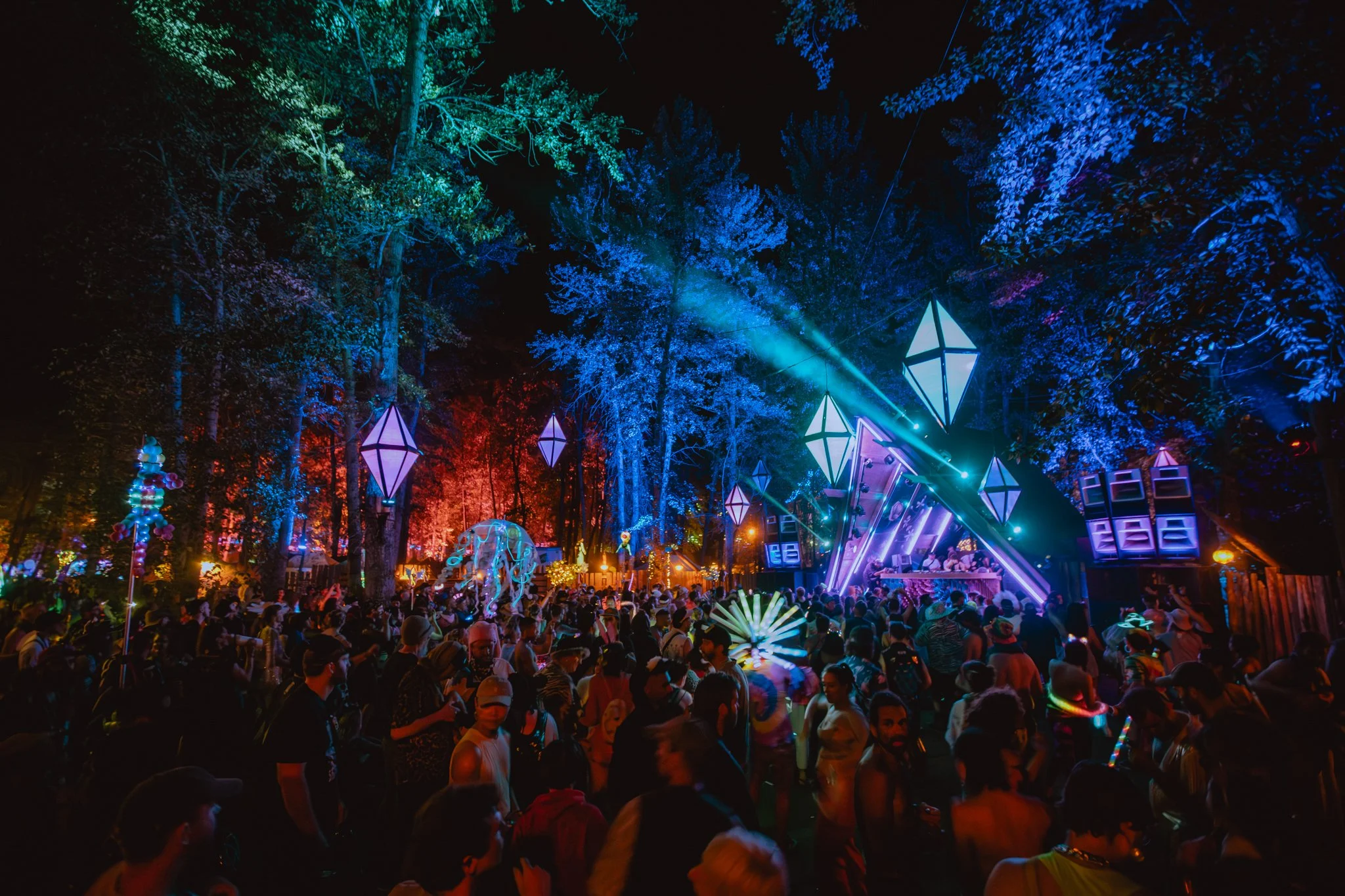
Celebrating its 18th year, Bass Coast is an independent, artist-owned festival shaped by a shared love of cutting edge electronic music, large scale art installations, and an expressive and open hearted community. Founded and led by Liz Thomson & Andrea Graham, Bass Coast has grown into one of North America’s most respected festivals for forward thinking curation, unique stage environments, innovative approach to harm reduction, and attention to detail.
The harm reduction program at Bass Coast, managed by Stacey Forrester (she/her) since 2013, represents a lineage of radical care developed by 2SLGBTQiA+ communities. By centering the safety and experiences of gender-diverse attendees, the festival has replaced "tough love" with a sophisticated system that includes clinical-grade FTIR drug testing and The Sanctuary—a responsive space for those experiencing overstimulation. This initiative frames safety as a collective responsibility, ensuring that 2SLGBTQiA+ siblings are supported as patrons, artists, and crew members.
The success of this model illustrates that standardized sexual violence prevention and compassionate care are essential for the health of the Canadian music industry. As Stacey Forrester notes, the increasing presence of the 2SLGBTQiA+ community in every level of the festival's operations remains a core motivation for this ongoing work.
The Interview: Evolution of Care at Bass Coast
Opening Question:
To start, could you introduce yourself and give us some history on the harm reduction program at Bass Coast? When did the initiative first take root, how many years has it been an official part of the festival, and what has the evolution looked like from its early iterations to the comprehensive system we see today?
My name is Stacey (she/her) and I manage the Harm Reduction program at Bass Coast Music festival. This is a position I have held since 2013, when the festival moved from its original home in Squamish to Merritt, BC. This is also when the festival started to intentionally resource a harm reduction program. When the festival was in Squamish, there was a small group of friends of Bass Coast founders Liz and Andrea, who were called the ‘Angels,’ and their focus was primarily on a small, cozy space where people could get tea and chill out. I like to always mention this, as it's a reminder that care for festival goers has been in the ethos since the very beginning.
With the move to Merritt in 2013, the festival was preparing for a larger capacity and so it made sense to start this program with the move. Initially the offering was small: a space with some air mattresses and a small table of safer sex supplies, that was open for a few hours into the evening, staffed by myself and some friends I had talked into joining me. The trust the organizers had in me allowed me to, each year, build on what we were already doing. Gradually, year over year we added longer hours, official volunteers that we recruited for their lived and professional experience, an education resource / supply space, an internal training program, etc.
My biggest piece of advice for events or communities when wanting to start something like this is start small, evaluate, tweak and add. A lot of initiatives like this fail because the humans are really enthusiastic but try to offer TOO much initially and don't have the capacity to do those things well. This pace also worked for us, as the program got to grow as trust from the community of Merritt grew, and so they are also in support of each addition, which is important to us.
1. The "Changemaker" Philosophy
Stacey, you and the co-founders were recently named "Changemakers of the Year" by Women in Music Canada. In the context of the high-energy festival in Merritt, what does "Change Maker" status actually look like in practice at 3:00 AM on a Saturday night?
This is such a great question, the win was such a surprise it still catches me off guard to think about!
I have been so fortunate to have this work supported by the Bass Coast organizers that I now have a lot of help. I have a co-manager Farrah and a logistics person Norah who help share the load during the festival so I no longer hold it all. We also have Meris who works the week after to support the teams well being during tear-down.
I have been at it so long, that it does run pretty smoothly even in the full - on action of Saturday night. The volunteers do 8 hours worth of training before they even arrive so they are prepared and many of them have been returning for many years and know the gig. Had you asked me 9 years ago- my answer might be “at the end of a 15 hour shift, trying to leave to get a short nap before being back in the morning.” But the festival has really invested in this work (which I recognise is a gift, given how economically precarious the events industry is right now), so this means I might actually be sleeping at 3 am OR popping into the Sanctuary to bring the nightshift team a snack and see how amazingly well they are doing, like a proud mama bear.
BUT because you just never ever ever know at a festival, I could also be in golf cart trying to find a person in the dark who is in distress, sitting with artist who is feeling like they could be having a panic attack, or talking to someone's grandma on the phone I just found on the ground who is worried as they have been calling their grandchild's phone all day with no answer. Sunday at that time you WILL find me working at the Sanctuary. Sunday is the busiest night for us and I chose to work overnight into Monday so I can be right in the thick of the chaos. All year round i LIVE for my Sunday night shift!
2. Consent as a Living Culture
Bass Coast has been a leader in moving beyond "No Means No" toward a proactive consent culture. How has that culture evolved at the festival over the years, and what were the pivotal moments that shaped the harm reduction policies we see today?
In my life outside of Bass Coast I am a consent educator, so consent and sexual violence prevention has also been foundational for the festival’s harm reduction program. There has been a fair bit of awareness over the last 10 years that sexual harassment and assault DOES happen at festivals and so a question we keep exploring is how can we bake consent into everything we do.
Framing consent as “no means no” is a great start, but it tends to over-simplify the issue, and treats it as an individual communication issue, not a larger societal one. “What is our responsibility as a festival to create a culture of consent?” Is a question that takes up a lot of space in my brain. Our very robust code of conduct was one of the major developments, with the first version created in 2018. With the pandemic shut down, I was able to spend some time developing it further and also write a detailed policy to accompany it. During this time, the festival also sponsored myself and another staff member to take training in restorative justice to help build our skills in this area. The policy now includes prevention strategies and outlines how we navigate disclosures and support all parties involved, building on principles of harm reduction and transformative justice. I encourage any event organizers to take inspiration from it! In 2024, we partnered with REES, which is a Canadian online reporting platform, to help collect reports should any happen.
3. Safety for the Queer and Gender-Diverse Community
For the queer and trans community, "safety" is often a luxury in nightlife. How do the harm reduction initiatives specifically address unique vulnerabilities, and celebrate the presence of gender-diverse attendees, artists, and crew?
Bass Coast is rooted in underground music culture, and it’s important to name that those spaces have long been created, shaped, and stewarded by queer communities. It would feel exploitative to draw from that lineage and then fail to create a space that feels safe for those same communities.
Harm reduction itself comes out of those lineages too, rooted in radical care and a recognition that people move through the world with different levels of vulnerability. That shows up in how we approach safety at the festival. Our teams are trained to respond to gender-based harm, to prioritize consent and agency, and to meet people where they’re at.
At the same time, it’s not only about reducing harm as you say in your question. It’s about actively celebrating diversity across all levels of the festival. Each year as I see more and more of my queer siblings as patrons, volunteers, managers, and artists, it makes my heart swell. You get much richer answers to the question: “When we say this space feels safe - safe for who?” If only non-marginalized people are answering that question, we are going to have gaps.
Feedback from your community is critical. I read through patron surveys, team feedback, and monitor social media closely, and reflect on it in the off season so I enter the next year with improvements in mind.
4. The BC Context: Harm Reduction as a Necessity
We are currently navigating a devastating overdose crisis in British Columbia. How does the reality of the toxic drug supply outside the festival gates dictate the urgency and the specific services, such as drug testing, you provide inside the festival?
My short answer to this is that with approximately 2000 people dying in BC yearly from toxic drugs, it is irresponsible to not build prevention into your event. You plan for fire, weather, crowd crush-you need to also plan for social risks. Like the risk that a toxic drug supply brings.
My longer answer is: Because BC can be considered the epicenter of the toxic drug supply crisis in Canada, there is (generally) a more progressive and accepting stance on harm reduction measures (out of necessity) here than even elsewhere in Canada and definitely the rest of North America. This does make it easier to obtain and promote supplies for safer drug use and have them on display at events without too much of an issue, comparatively..
The years between 2016 and 2018 marked a turning point in our program. The overdose crisis was declared in 2016, with widespread access to naloxone becoming more common and in 2018, 16 year old Adison Davies passed away due to substances (not Fentanyl) at a festival in Kamloops, which is very close to Merritt, obviously. Following Adison's death, the coroner in her case included a recommendation that substance checking be offered at major festivals in BC to prevent future deaths, which nudged a door open for us that we had been exploring for Bass Coast. Around 2018 or 2019 we moved the harm reduction and sanctuary from a secluded spot on site to the main road, front and centre, which to me is an important declaration of sorts that I don't even think was an option on the table in years prior.
5. The Power of Data: Collaborating with Interior Health
Bass Coast is known for its sophisticated drug-testing setup in collaboration with Interior Health. Can you walk us through how this partnership works and why having professional, clinical-grade testing available on-site is a game-changer for attendee autonomy?
I am proud of a lot of the things we have done and the relationship to bring substance checking into the fold in 2019 is right up there on the list. Antoine from Interior Heath leads the program and arranges for the 3 FTiR machines and technicians to spend the weekend with us, with support of the BC Centre for Substance use. It’s been a gift to work with him each year as he is up to date on drug market trends in the area and when an option, can use technicians who are local, which is a nice compliment to the team. It means a lot that Interior Health supports having checking at the festival.
The testing services are located right beside the education space so people leave from getting their stuff checked and come right into the education space, where we can have a conversion about what they just learned and make sure they have what they need to reduce risk. Data that Interior Health has collected from Bass Coast and Shamblaha tells us that most samples are what people expected them to be and that most people are testing are doing so before using, both of which are really positive things to hear!
Substance checking isn't just about potentially finding Fentanyl. When a person actually knows the composition of their drugs and isn't guessing, they can alter the amount, timing and or route of their consumption so that they are more likely to have an enjoyable experience, having more control and autonomy over it. Think about how people choose alcohol when in a beer and wine store.. Is the event they are going to more suited to beer, wine, or tequila? They make a choice based on strength, ingredients, the context in which they are drinking in and their previous experience with a type of alcohol. That knowledge lets them shape the kind of night they want. Substance checking, to some degree, extends that same ability to people whose drug of choice isn’t alcohol—giving them the information they need to make safer, more intentional decisions instead of guessing what they’re taking. Patrons have spent a decent amount of money to get to the festival- yes I don't want people to get into medical crisis due to something they ingested, but I also don't want them to have a rough emotional/ psychological experience and miss a night of music due to getting something they didn't intend to consume.
6. The "Sanctuary" and Holistic Care
Harm reduction isn't just about substances; it's about mental and emotional well-being. Could you describe the "Sanctuary" space and how your team supports people through difficult "psychedelic first aid" or sensory overstimulation?
The sanctuary space is a large covered tent with about 20 air mattresses where people can take a break from the wildness of the festival. Here folks can get cozy and connect with one of our amazing team members. People access this space for a variety of reasons; anxiety, over stimulation, their tent is too hot and they need a rest, having a disagreement with a partner and need a quiet place to talk and, of course, over intoxication or otherwise having a challenging time on substances. I affectionately call it the “daycare” of the festival as you can come into the space when you need a responsible adult to watch you while you have some juice and pet something soft. A lot of it is really just active listening and tending to their basic needs, and maybe a little bit of redirection at times - folks can colour, play with some sensory toys or sit and fix their festival makeup / outfit.
It’s important to clarify that we don’t provide what is commonly referred to as “trip sitting,” which involves a specialized, pre-planned role supporting someone through a psychedelic experience. Our work is more responsive and focused on immediate safety. We stay with individuals while they are under the influence, helping them remain grounded and supported until they return to a more stable state of mind and body. It can be easy to get into a negative loop while under the influence, especially in a high sensory environment like a festival, so popping into the sanctuary when distressing feelings or behaviors start to show, can be a bit of a reset on the night, and put people on the path to a more enjoyable experience. 20 minutes of being seen and supported can do wonders for anyone!
7. Equitable Spaces for Artists and Crew
The award recognized the creation of safer spaces for everyone, including those behind the scenes. How do you ensure that the artists and the hard-working crews are afforded the same level of care and consent-based boundaries as the attendees?
Yes! The care is not just public facing, it's important to fully walk the walk. We want people to be working on a site where they are respected and cared for. Volunteers and contract / gig workers and artists, especially queer, trans and BIPOC artists are all vulnerable to exploitation and harm within the music industry and we wanted to help challenge those norms.
So we do this via a few offerings. Our Code of Conduct of course, which everyone is asked to sign, including talent. This outlines our expectations of everyone who is a part of the team (volunteers, managers, contractors and vendors and yes even talent). In 2022, we introduced an internal video series for volunteers, managers, contractors and vendors about the things that are important to us such as consent, harm reduction, caring for the river that runs through the site, cultural appropriation etc. The team is expected to watch the videos and take a quiz to demonstrate their understanding. In 2023, I proposed that the talent also be invited to watch and do the quiz and it was well received. This was kind of a surprise, as artists in general are kind of treated as being above the rules. Including them helps create the understanding that access to education to help show up as your best self is for everyone and no one is “above” our expectations. I have since had a few of the acts reach out to tell me how they have never been asked to do anything like that and how much it means.
We also offer harm reduction supplies in the artist bar and I make myself available to artists as needed. A couple of times now artists have been having a moment on site struggling with any of the various things that come with being a touring DJ and I am able to connect with them 1:1.
8. From Merritt to the Mainstream
Many people experience a "Bass Coast Glow" where they feel more respected and seen than in their daily lives. What are the key lessons or "survival tools" you hope attendees take home with them to make their own local queer scenes in BC safer?
Bass Coast is so focussed on creativity and art and my personal praxis is that learning to care for yourself and each other is art as well. It takes practice, it can be messy, but it brings such beauty to our world. So I just hope to show that to others, to give them the space to practise and continue that in their lives back home.
9. Overcoming Stigma
There is often a "tough love" or "just say no" stigma attached to festival culture from those on the outside. How does the Bass Coast model prove that compassion and education are more effective tools for public health than policing and shame?
Music and drugs have been besties for generations, and while that isn't changing, the drugs are. My colleague Chloe who runs the drug testing at Shambhala said something to the effect once that if drugs are getting into federal prisons (which they are), they are getting into your festival. The reality is, that by the time people set foot into our education space they have most likely already made the decision to take drugs. I now have a few minutes to check in around their knowledge level and have a conversation about what risk reduction looks like for them.
At least 2 things happen in that conversation : yes, critical information is shared but also - that person gets to experience what it feels like to be able to talk about their drug use without having to hide or downplay or feel shame about it. For a lot of people they are not used to having the space where they can ask questions without judgement and talk about drugs in a way that is very normal and even casual and, to me, that is just as important as the education part. It is my hope they feel empowered to do the same within their friend groups and it spreads. Shame and stigma and using in secret kills people. Most people who die of overdose are alone. People tend to make safer choices when they a) have information and b) know they are cared for. Withholding or banning harm reduction, locking people up and making people feel disposable never solved anything - if it did it would have solved the issue by now! We are 55 years into the war on drugs and 10 years into the overdose crisis and there are no signs of it letting up.
10. The Future of Safer Spaces
Looking forward, what is the next frontier for harm reduction at Bass Coast? As the "Changemakers of the Year," where do you see the most room for growth in the Canadian music industry at large?
This is such a great question to end on!
I don't have any plans to add anything huge at Bass Coast for the next couple of years, but I am exploring opportunities to help mentor other events to learn from us. This could involve something similar to an “exchange program” where folks come and see our program in action and can be supported to take what they learned, share resources ect. It feels like a natural point in our story to pause and share what we have learned.
There are a couple of things I hope to see industry wide:
I would love to see the expectations around harm reduction and sexual violence prevention to be standardized, so that it is a requirement as part of permitting and events ( and bars / venues) are required to have some form of it (and have it be adequately funded).
In an ideal world, there would be funds to better compensate harm reduction team members. As the cost of living rises, it is a big ask for people with lived and professional experience to come and work for a weekend for free. I know festivals run on volunteer power, and it's been that way forever, but it can also limit the volunteer roster to who can afford it, excluding many folks with important skills!
Ticket link: