
New to Camping? Starting With Your Vehicle Is the Easiest Way In
New to Camping? Starting With Your Vehicle Is the Easiest Way In
By Karin Shard (with some TIPS from Jude)
When I first started thinking about camping, I’ll admit it felt intimidating. There was gear to buy, systems to figure out, weather to worry about, and that quiet anxiety that I’d forget something important—like how to stay warm or make coffee in the morning. What I learned pretty quickly, though, is that if you live in British Columbia, one of the easiest and most practical ways to start camping is simply by using the vehicle you already own.
Vehicle-based camping—often called car camping—takes a lot of pressure off. I wasn’t trying to do everything perfectly or all at once. I had my supplies close by, a familiar place to retreat to if the weather turned, and the option to leave if things didn’t feel right. It also turned out to be a great way to see if camping was something I wanted to invest more seriously in later, like moving up to a camper van or RV.
Why Vehicle Camping Works So Well in B.C.
British Columbia feels made for vehicle-based camping. I can drive a relatively short distance and find myself parked beside a lake, near the ocean, or tucked into the trees. Provincial parks, recreation sites, and coastal campgrounds offer accessible places to stay, often with picnic tables, fire rings, and basic facilities that make a big difference when you’re just starting out.
The weather here also keeps you humble. Even in summer, I’ve had nights where the temperature dropped fast, rain rolled in unexpectedly, or fog settled in overnight. Having my vehicle right there meant extra layers, dry clothes, shelter, and the ability to warm up when needed. That flexibility made the experience feel manageable instead of stressful.
Over time, I realized vehicle camping was also teaching me skills I’d need if I ever upgraded to a camper van or RV—how to organize gear, manage food, deal with changing weather, and understand how much space I actually use day to day.
Camping and the LGBTQ+ Community
Camping has been especially meaningful for me within the LGBTQ+ community. I know many queer folks who turn to outdoor travel as a way to find freedom, calm, and space to breathe. Being out in nature can feel grounding in a way that everyday life sometimes doesn’t.
Vehicle camping, in particular, makes it easier to travel on my own terms. I get to choose where I go, how long I stay, and how visible or private I want to be. Whether I’m camping solo, with a partner, or with chosen family, that sense of control matters. It’s one of the reasons camping—and especially vehicle-based camping—has become so popular within the LGBTQ+ community here in B.C.
You can find some queer camping groups online on facebook and Meetup - here are some of them:
Rainbow Sisters On the Fly.
https://www.facebook.com/groups/1858752764407755
Sisters on the Fly is a North American women’s camping group that hosts camping (and other events) across the continent. Some are huge and some are small, there’s usually a theme, and there’s always a lot of friendly faces. There’s a ‘rainbow sisters’ connection but most of the campouts are a mix of cis and queer.
Okanagan Rainbow Women’s Events - Annual Spring Campout (June)
This typically happens in the spring at the Gold Panner Campground, and looks amazing. Watch their page for this year’s update!
The Queer Caravan
This is a facebook page that was started by Jude Goodwin as a group for BC queer people wanting to connect and travel together. It’s not been very active but if you like the concept, join in! The facebook group can be found here. Jude is also thinking about setting up a Meet Up and hosting some local campouts. Stay tuned.
Choosing the Right Campsite
When I was starting out, I stuck to established campgrounds, and I’m glad I did. Provincial parks like Alice Lake, Porteau Cove, or Cultus Lake felt straightforward and well maintained. Recreation sites were another great option—often free or low-cost and a bit more rustic, but still accessible by vehicle.
I always looked for campsites where I could park right beside my setup. It made unloading easier and gave me the freedom to adjust things as I went. Checking campground rules and fire bans became part of my routine, especially during the dry summer months.
TIP from Jude: When I was first testing out my ‘rig’ I booked into Klahanie a private campsite across from Shannon Falls on the Sea to Sky. It was nearby and I didn’t have to struggle with the reservation system that plagues provincial campsites. Klahanie has a great public washroom area and the sites are clean and lovely. There are beautiful trails around Shannon Falls, the Chief trail as well, and the Sea to Sky Gondola is only forest walk away.
Speaking of Provincial Park reservations, I recently discovered an app called CampNab.
Finding reservations at perpetually sold-out campgrounds (Porteau Cove anyone?) can be so frustrating. With CampNab, you tell them when, where, and how long you want to camp for. They’ll notify you (via text) when a suitable spot opens up at that campground—so you can nab that sold-out campsite reservation! Plans start at $10/month. We’re not affiliates but we wanted to share.
Camping Essentials for Beginners
I learned quickly that I didn’t need fancy or expensive gear. A simple, flexible setup went a long way.
Shelter and Sleeping
I’ve used both a tent and my vehicle for sleeping, depending on the trip. SUVs, hatchbacks, and vans work especially well for sleeping inside, and adding a foam pad or air mattress made a huge difference. Window covers or reflective panels helped with privacy and insulation.
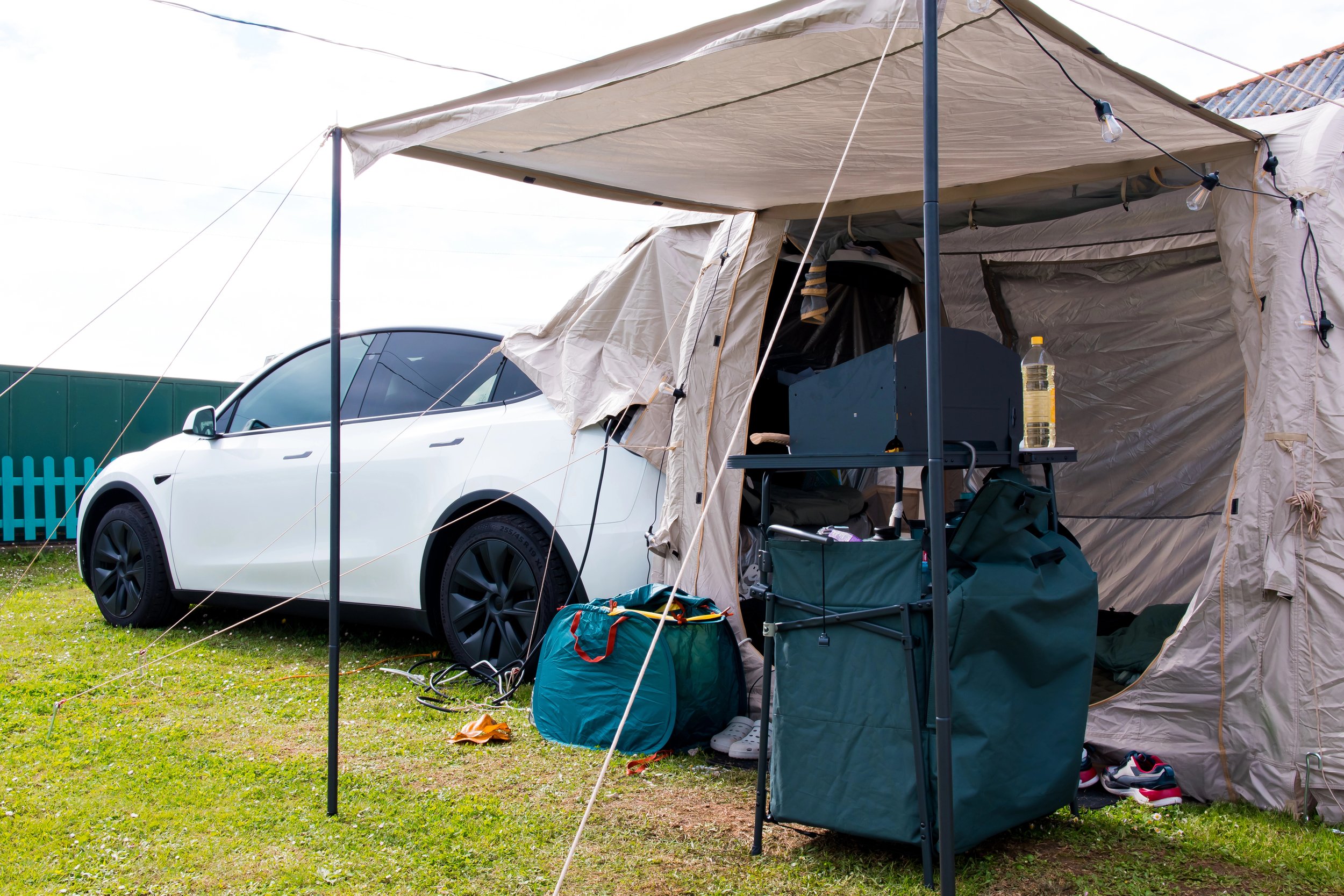
I always bring a sleeping bag rated for cool nights since B.C. temperatures can change quickly, along with extra blankets just in case. One addition I’ve found especially useful is a vehicle tent (like these on Wayfair). These attach directly to the back or side of your vehicle and create an enclosed extension of living space. They work well as a dry place to eat when it’s raining, somewhere private to change clothes, or extra covered storage for gear. In wet weather, having that buffer space between sleeping and the outdoors makes camp feel more comfortable and functional.
That kind of modular setup feels similar to how people use camper vans or RVs, and it helped me understand how I might want to organize space if I ever upgrade. One vehicle tent I have on my wishlist is the Mogics Carsule, a very cool Pop-up Clam type tent.
Clothing
Layers are everything. I pack base layers, warm mid-layers, and a waterproof jacket every time. Comfortable footwear is key, along with sandals or slip-ons for camp. Even in summer, I bring warm socks, a toque, and rain gear—because this is B.C.
TIP from Jude: A puffy vest will never do you wrong, and here’s a TIP: Find yourself a couple of nice but sturdy and zipped pillow cases. You can stuff all this extra cloth into the cases and use them as pillows.
Food and Cooking
I keep food simple. A cooler with ice packs, a camp stove or BBQ, and minimal cookware are usually enough.
Some of my go-to low-prep meals include sandwiches and wraps, hot dogs or sausages, foil packet meals with pre-chopped vegetables, pasta salad made ahead of time, chili or soup reheated at camp, and instant meals like ramen or instant rice. Breakfast is often oatmeal packets, bagels with cream cheese, yogurt, or hard-boiled eggs. Snacks are easy things like trail mix, fruit, cheese, crackers, and granola bars.
Less prep and less cleanup means more time to actually enjoy being outside.
TIP from Jude: I have a Hot Logic which I can easily plug into a cigarette lighter port or my Jackery. It’s like a little oven, just big enough for one frozen meal (macaroni or spaghetti or curried chicken are my go-tos). It takes about 45 minutes to heat thoroughly but then you have a tasty meal that you can accompany with veggies and humus dip. The Hot Logic stores flat, so it takes up very little room.
Water, Storage, and Comfort
I always bring enough drinking water, airtight or bear-safe food containers, and bins to keep things organized. A headlamp, first aid kit, bug spray, sunscreen, camp chairs, and a power bank are small things that make a big difference.
TIP from Jude: A Jackery is popular with many car campers - easy to charge, and can last two days. Or, you can purchase one that comes with folding solar panels, for recharging. A Jackery has a port for all needs including device charging, small plugin heaters, and a kettle or coffee pot.
Keeping It Simple My First Few Trips
I didn’t try to do too much at once. One or two nights close to home was plenty. I planned easy meals, kept my schedule loose, and gave myself permission to just sit and be where I was.
Things went wrong sometimes. I forgot items, underestimated the cold, or realized I wanted more space. Those small mistakes were actually the best lessons—and exactly why starting with vehicle camping made sense before committing to a camper van or RV.
Camping alone can be peaceful and recharges the spirit. And camping with others is fun too. Sharing camping tips and ideas and plans is always on the disucssion dance card so you’ll learn a lot from the more experienced campers.
Respecting the Land
Camping in B.C. comes with responsibility. I follow Leave No Trace principles, store food properly, respect wildlife, follow fire regulations, and always leave my campsite cleaner than I found it.
Be BEAR AWARE wherever you camp. Learn the facts, safety advice, and conflict reduction strategies for all the wildlife in BC - and especially bears.
A Practical Path Into Camping
Camping didn’t start for me with a big purchase or a perfect setup. It started with my vehicle, a few essentials, and a willingness to learn as I went. Vehicle camping gave me the freedom to explore, experiment, and figure out what kind of camper I actually am.
British Columbia offers incredible places to camp, and you don’t need a fully built rig to enjoy them. Starting with what I already had made all the difference—and it’s a path I’d recommend to anyone curious about camping, camper vans, or RV life.
Karin Shard is an editor and writer living in Squamish, BC. She is co-editor of What’s On Queer BC and former editor and publisher of the Squamish Tongue in Cheek.