
The Sweet Story of Gingerbread: A Personal Christmas Tradition
The Sweet Story of Gingerbread: A Personal Christmas Tradition
By Karin Shard
Every December, the smell of gingerbread fills my kitchen — that perfect mix of ginger, cinnamon, and cloves, wrapped in the deep sweetness of molasses. It’s a scent that feels like coming home. No matter how old I get, that aroma takes me right back to childhood, when my hands were dusted with flour and the counters were lined with cookie cutters shaped like stars and snowmen.
In my family, baking was never just about filling tins — it was about giving. Every year, we’d spend a whole weekend baking a dozen kinds of cookies and arranging them on plates to deliver to friends and neighbours. Those cookie plates became our family’s little gesture of love and community. And no matter how many kinds we made — shortbread, snowballs, sugar cookies — it was always the gingerbread cookies that everyone waited for. They were the coveted ones, the first to disappear, the ones people would ask about weeks in advance: “You’ll be making the gingerbread again this year, right?”
Now, one of my favourite holiday traditions is visiting the Christmas Market. The moment I step through the gate, it feels like Christmas has arrived — the air filled with the scent of roasted nuts, mulled wine, and, of course, warm gingerbread. There’s something magical about standing beneath twinkling lights, holding a piece of fresh, soft gingerbread from one of the wooden stalls, still warm and fragrant in your hands. The spice, the sweetness, the laughter of the crowd — it’s as if the entire history of the holiday lives in that one moment. Every year, I buy a few pieces to take home, but somehow they never last the drive back.
From Ancient Honey Cakes to Medieval Magic
When I first learned about the history of gingerbread, I was amazed. It began as honey cakes in ancient Greece and Egypt — not the sugary cookies we know today, but ceremonial treats baked with care and meaning. As ginger made its way from Asia to Europe, bakers started experimenting, adding it to breads and cakes.
By the Middle Ages, those simple loaves had become precious. In monasteries and small European towns, bakers would press gingerbread dough into carved wooden molds of saints, kings, and animals, then decorate them with gold leaf. They were so beautiful that people gave them as love tokens at fairs. Imagine going to a market and receiving a golden heart-shaped cookie as a symbol of affection — that’s gingerbread’s earliest love story.
Royalty and the First Gingerbread People
My favourite part of gingerbread history, though, is Queen Elizabeth I. She had a mischievous sense of humour — and the power to make trends. She once had her bakers create gingerbread cookies shaped like her visiting guests. These “gingerbread people” became such a hit that everyone wanted their own cookie likeness.
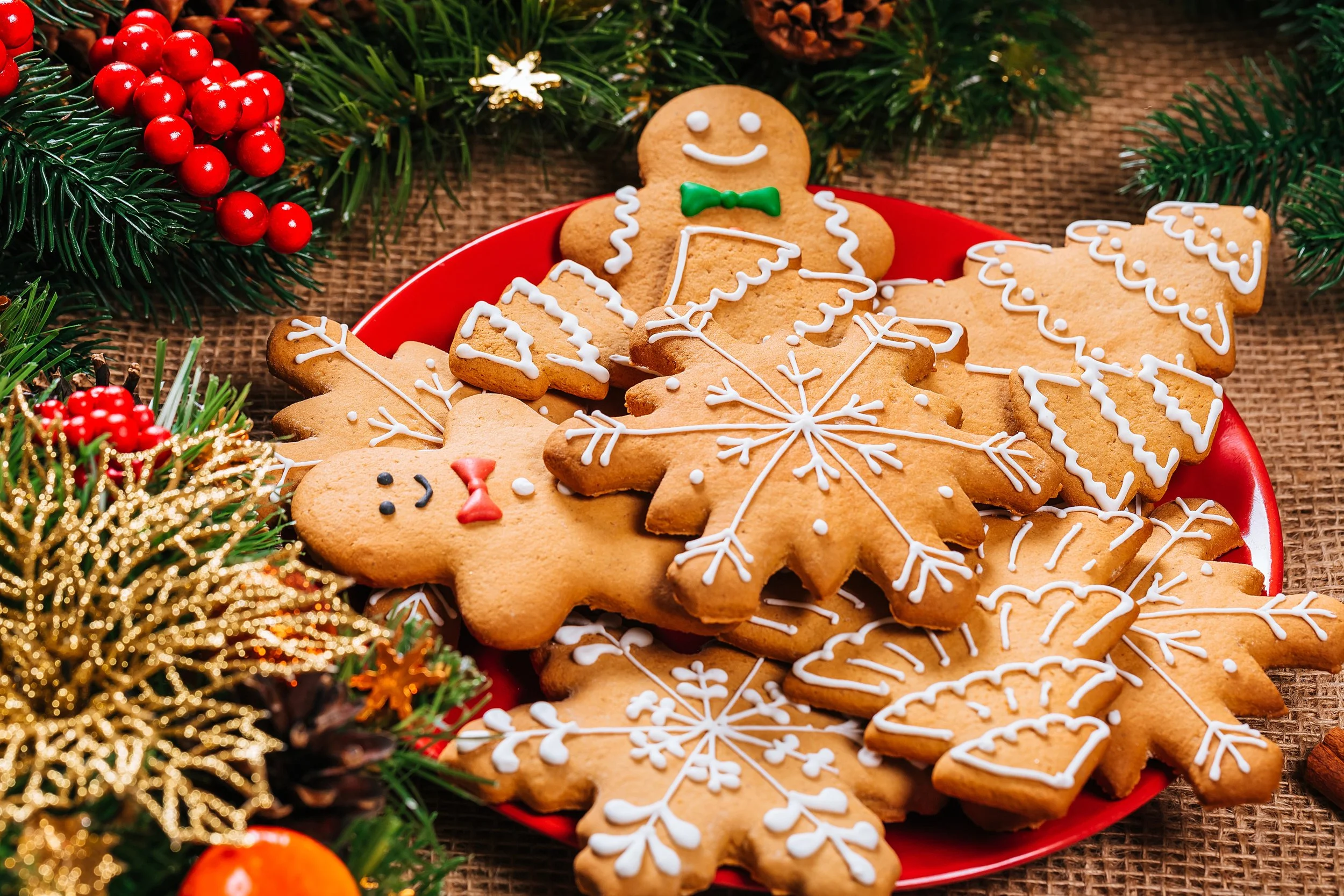
It’s funny to think that the little gingerbread people we decorate today, with their frosting smiles and candy buttons, started as an act of royal playfulness. There’s something timeless about that — the mix of creativity, hospitality, and a little bit of whimsy.
The Fairy-Tale Gingerbread House
Every Christmas, I make at least one gingerbread house. It’s never perfect — the roof slides, the icing drips, and the candy decorations seem to disappear faster than I can place them — but that’s part of the fun. And as it turns out, this tradition also comes from a story.
In early 19th-century Germany, after the Brothers Grimm published Hansel and Gretel, bakers started making Hexenhäuschen — witch houses — from gingerbread. No one’s sure if the story inspired the houses or if the houses inspired the story, but the two became inseparable. Families baked them together during the holidays, turning a once-luxurious dessert into a cozy, creative ritual.
I like to think that every time we piece together a gingerbread roof or line the walls with candy, we’re part of that same legacy — combining sweetness, imagination, and a little bit of wonder.
Crossing the Ocean and Finding Home
When German immigrants brought gingerbread to North America, molasses replaced honey, giving it that deep, dark richness that I now associate with winter baking. By the Victorian era, gingerbread had become part of Christmas itself — the kind of homemade, sentimental tradition that families could share.
That’s the version I grew up with. My mother’s recipe card is still tucked into my cookbook, stained with molasses and written in her elegant looping script. Every year, I follow her notes: “extra cloves for warmth” and “don’t overbake — chewy is better than crisp.” I swear I can still hear her humming while she rolled the dough.
Gingerbread Today — and the Warmth It Brings
These days, people build gingerbread creations the size of small houses — there’s even a record-breaking one in Texas that stood over 10 feet tall. But honestly, the joy of gingerbread isn’t in how grand it is. It’s in the moment you share it — the laughter when someone’s cookie breaks in half, the smell of spices that lingers long after the oven’s off, the first bite that tastes like nostalgia.
A Bite of History, A Taste of Home
Every time I bake gingerbread, I feel like I’m adding my own little chapter to a story that began thousands of years ago. From ancient honey cakes to fairy-tale cottages, it’s always been about celebration, connection, and warmth.
So this Christmas, when I pull a tray of cookies from the oven and the kitchen fills with that familiar, spicy aroma — or when I’m wandering through the Christmas Market with a soft gingerbread heart in my mittened hands — I’ll pause for just a second. Because in that moment — in that scent — there’s history, memory, and love, all baked into something sweet enough to share.
Karin Shard is an editor and writer living in Squamish, BC. She is co-editor of What’s On Queer BC and former editor and publisher of the Squamish Tongue in Cheek.