
Quinn and Mark Tewksbury: Canadian Sport, Identity and Legacy
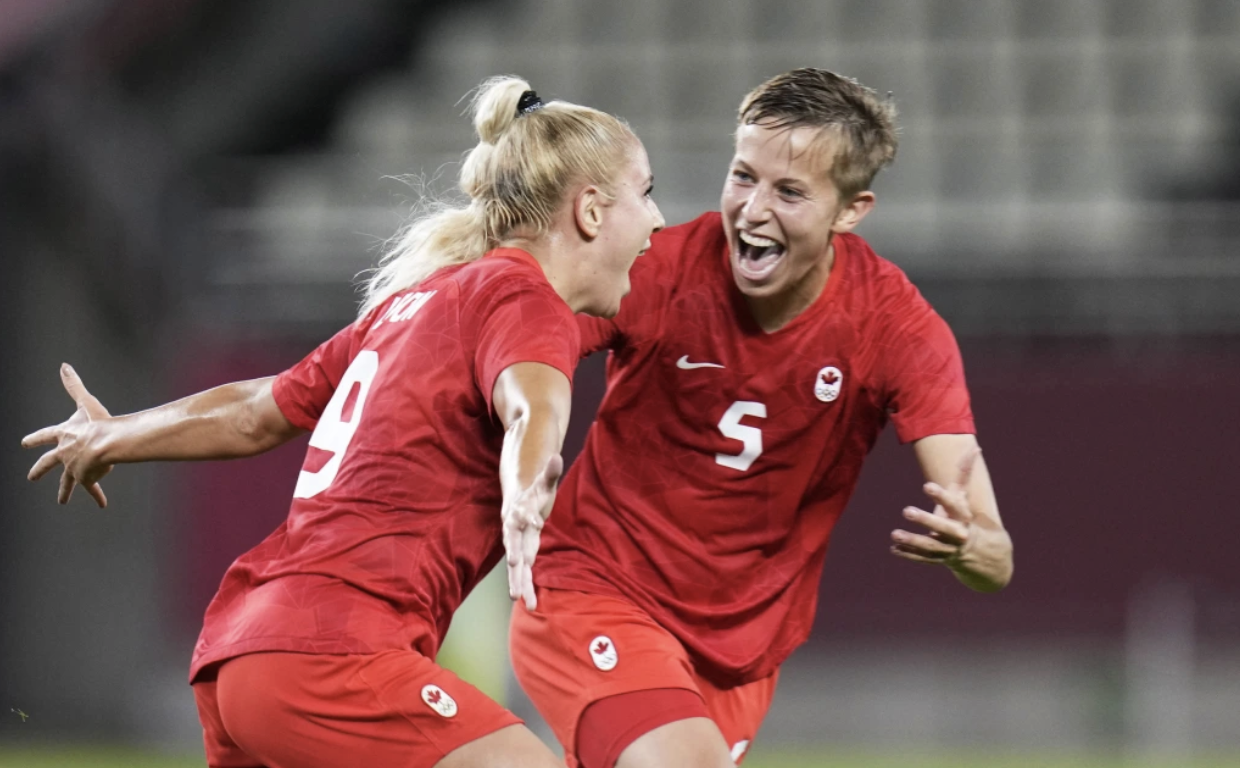
Canadian sport has many public faces: packed hockey arenas, Olympic podiums, soccer crowds, community pools, winter rinks and local fields that shape children long before a national anthem plays. Inside that wider story, LGBTQ athletes have added another layer to how Canada understands pressure, visibility and belonging. Their careers are not only about medals. They are also about who gets to feel safe while chasing them.
Quinn and Mark Tewksbury belong to different generations and different sports, but their biographies speak to the same question: what changes when an athlete is known fully, not only by statistics or podium photos? In Canada, that question sits beside broader sports culture, where fans move between live matches, athlete features, data, media coverage and platforms such as bet365 Canada without losing interest in the human stories underneath.
Quinn’s story begins in soccer’s modern, team-first environment. Tewksbury’s begins in the disciplined isolation of elite swimming. Put together, they show how Canadian sport moved from silence and delayed disclosure toward a more open, though still imperfect, language of identity.
Why these two Canadian biographies belong together
At first glance, Quinn and Tewksbury seem like an unusual pairing. Quinn is a soccer midfielder, an Olympic gold medallist from the Tokyo 2020 team, and a public figure in conversations about trans and non-binary visibility. Tewksbury is a retired swimmer, Olympic champion in the 100m backstroke at Barcelona 1992, and a long-time advocate for inclusion and human rights.
The connection is not positional, tactical or even generational. It is cultural. Both show that an athlete’s public identity can reshape the sporting environment around them.
Tewksbury’s career explains what visibility looked like when the sporting world was less prepared for open conversations about sexuality. Quinn’s career explains what visibility looks like in a newer media age, when every sentence, selection and tournament moment can carry social meaning far beyond the field.
For Canadian readers, their stories help turn abstract inclusion language into biography. For international readers, they show that Canada’s sporting identity is not built only on medals. It is also built on who gets remembered, who gets protected and who gets to speak.
Mark Tewksbury: the champion who later changed the conversation
Mark Tewksbury’s swimming career had a classic Olympic arc: early international pressure, relay achievement, then the defining individual performance. At Seoul 1988, he won silver with Canada in the men’s 4x100m medley relay. Four years later in Barcelona, he won gold in the 100m backstroke and became one of the country’s most recognizable Olympic athletes.
The pool is an unforgiving place to build a public self. Races are short, margins are tiny and the athlete often stands alone. That made Tewksbury’s later public role even more significant. He did not become important to Canadian sport only because he won. He became important because he eventually used the authority of winning to speak about inclusion.
Tewksbury came out publicly in 1998, several years after his Olympic peak. That timing matters. It reminds readers that an athlete may succeed publicly while still managing private fear, silence or uncertainty. The medal does not automatically remove the cost of concealment.
His later work as a speaker, Olympic leader and advocate turned his biography into a bridge. He belonged to the era when many athletes stayed quiet, yet he helped create a vocabulary for the athletes who followed. That is why his legacy is not frozen in Barcelona. It keeps moving through every Canadian sports conversation that treats identity as part of athlete welfare rather than a distraction.
Quinn: a modern footballer carrying a different kind of visibility
Quinn’s career sits inside a very different media environment. They are a Canadian soccer midfielder who played a role in the national team’s Olympic journey, including the gold medal run at Tokyo 2020. Publicly known as transgender and non-binary, Quinn became a major reference point for representation in international sport.
What makes Quinn’s biography especially useful is that the football part must not be pushed aside. They are not only a symbol. They are a midfielder, which means their work is often about balance, spacing, transition and the small decisions that let a team breathe. In soccer, midfielders can be central without always being loud.
That fits the larger story. Quinn’s visibility matters because it exists inside elite performance, not outside it. Their presence on the pitch asks sport to hold two ideas at the same time: identity is important, and the athlete still has a technical role, tactical responsibility and competitive standard.
For younger Canadian athletes, that distinction is powerful. Representation is not a poster placed next to sport. It is sport itself, played by people with full lives, histories and identities.
What their careers teach about pressure
Quinn and Tewksbury faced different forms of pressure. Tewksbury came through a period when silence was often treated as the safer option. Quinn competes in a period when visibility can inspire people but also invite scrutiny, especially online.
The pressure has changed shape, but it has not disappeared.
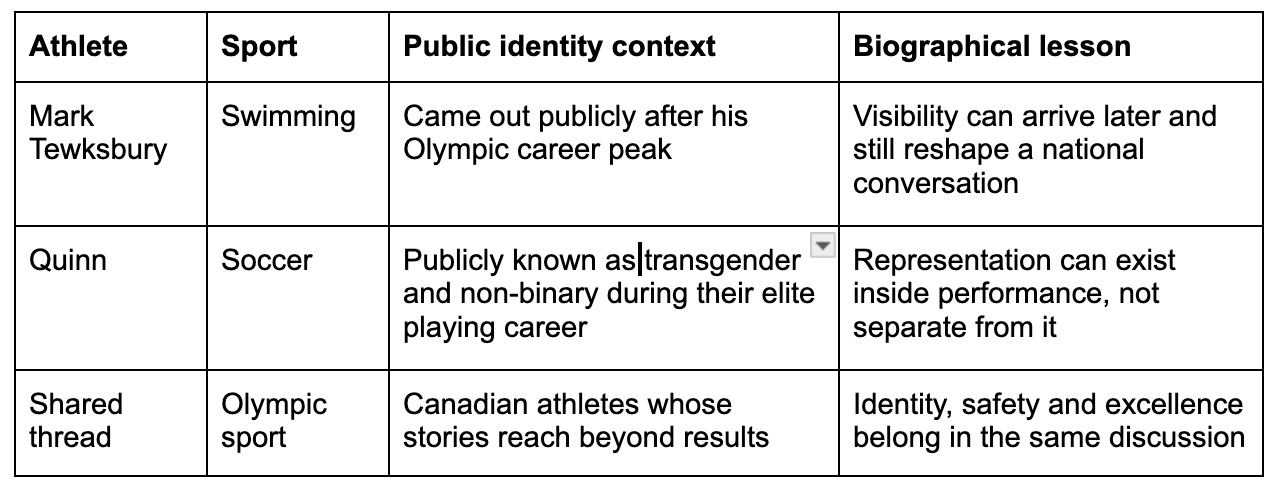
Canadian sport has many public faces: packed hockey arenas, Olympic podiums, soccer crowds, community pools, winter rinks and local fields that shape children long before a national anthem plays. Inside that wider story, LGBTQ athletes have added another layer to how Canada understands pressure, visibility and belonging. Their careers are not only about medals. They are also about who gets to feel safe while chasing them.
Quinn and Mark Tewksbury belong to different generations and different sports, but their biographies speak to the same question: what changes when an athlete is known fully, not only by statistics or podium photos? In Canada, that question sits beside broader sports culture, where fans move between live matches, athlete features, data, media coverage and platforms such as bet365 Canada without losing interest in the human stories underneath.
Quinn’s story begins in soccer’s modern, team-first environment. Tewksbury’s begins in the disciplined isolation of elite swimming. Put together, they show how Canadian sport moved from silence and delayed disclosure toward a more open, though still imperfect, language of identity.
Why these two Canadian biographies belong together
At first glance, Quinn and Tewksbury seem like an unusual pairing. Quinn is a soccer midfielder, an Olympic gold medallist from the Tokyo 2020 team, and a public figure in conversations about trans and non-binary visibility. Tewksbury is a retired swimmer, Olympic champion in the 100m backstroke at Barcelona 1992, and a long-time advocate for inclusion and human rights.
The connection is not positional, tactical or even generational. It is cultural. Both show that an athlete’s public identity can reshape the sporting environment around them.
Tewksbury’s career explains what visibility looked like when the sporting world was less prepared for open conversations about sexuality. Quinn’s career explains what visibility looks like in a newer media age, when every sentence, selection and tournament moment can carry social meaning far beyond the field.
For Canadian readers, their stories help turn abstract inclusion language into biography. For international readers, they show that Canada’s sporting identity is not built only on medals. It is also built on who gets remembered, who gets protected and who gets to speak.
Mark Tewksbury: the champion who later changed the conversation
Mark Tewksbury’s swimming career had a classic Olympic arc: early international pressure, relay achievement, then the defining individual performance. At Seoul 1988, he won silver with Canada in the men’s 4x100m medley relay. Four years later in Barcelona, he won gold in the 100m backstroke and became one of the country’s most recognizable Olympic athletes.
The pool is an unforgiving place to build a public self. Races are short, margins are tiny and the athlete often stands alone. That made Tewksbury’s later public role even more significant. He did not become important to Canadian sport only because he won. He became important because he eventually used the authority of winning to speak about inclusion.
Tewksbury came out publicly in 1998, several years after his Olympic peak. That timing matters. It reminds readers that an athlete may succeed publicly while still managing private fear, silence or uncertainty. The medal does not automatically remove the cost of concealment.
His later work as a speaker, Olympic leader and advocate turned his biography into a bridge. He belonged to the era when many athletes stayed quiet, yet he helped create a vocabulary for the athletes who followed. That is why his legacy is not frozen in Barcelona. It keeps moving through every Canadian sports conversation that treats identity as part of athlete welfare rather than a distraction.
Quinn: a modern footballer carrying a different kind of visibility
Quinn’s career sits inside a very different media environment. They are a Canadian soccer midfielder who played a role in the national team’s Olympic journey, including the gold medal run at Tokyo 2020. Publicly known as transgender and non-binary, Quinn became a major reference point for representation in international sport.
What makes Quinn’s biography especially useful is that the football part must not be pushed aside. They are not only a symbol. They are a midfielder, which means their work is often about balance, spacing, transition and the small decisions that let a team breathe. In soccer, midfielders can be central without always being loud.
That fits the larger story. Quinn’s visibility matters because it exists inside elite performance, not outside it. Their presence on the pitch asks sport to hold two ideas at the same time: identity is important, and the athlete still has a technical role, tactical responsibility and competitive standard.
For younger Canadian athletes, that distinction is powerful. Representation is not a poster placed next to sport. It is sport itself, played by people with full lives, histories and identities.
What their careers teach about pressure
Quinn and Tewksbury faced different forms of pressure. Tewksbury came through a period when silence was often treated as the safer option. Quinn competes in a period when visibility can inspire people but also invite scrutiny, especially online.
The pressure has changed shape, but it has not disappeared.
The evergreen value of Quinn and Tewksbury
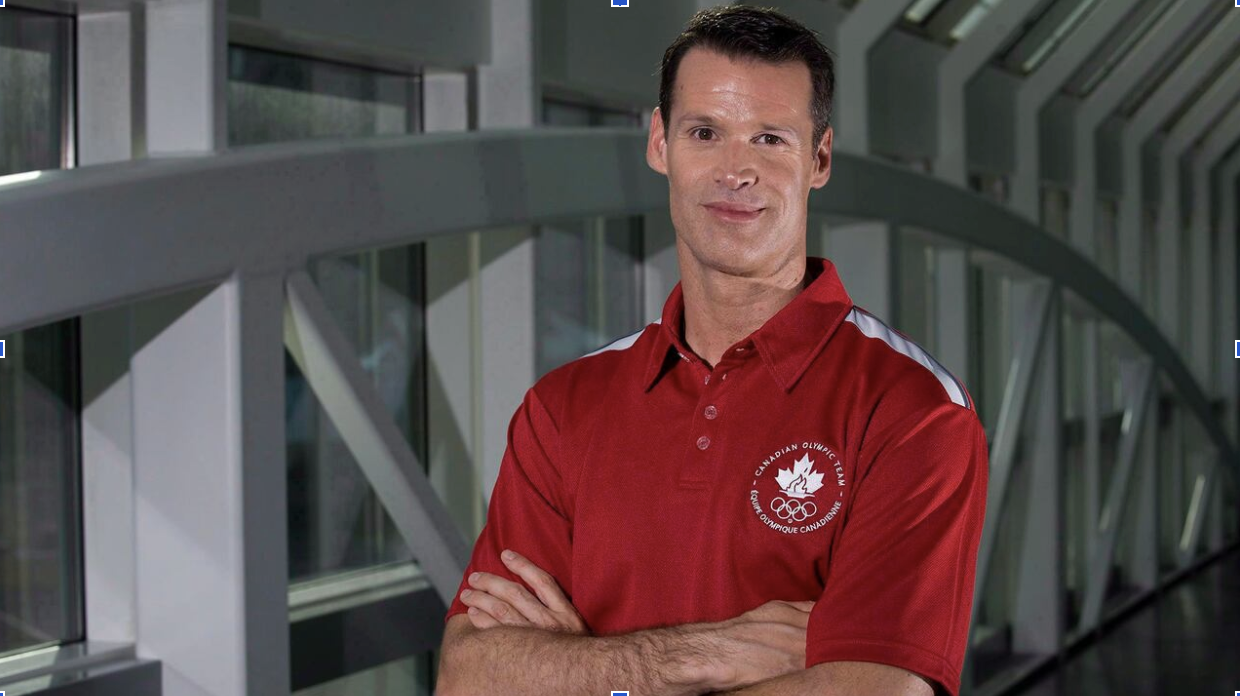
The reason Quinn and Mark Tewksbury remain useful subjects is that their biographies do not expire with one tournament or anniversary. Tewksbury’s Olympic gold belongs to 1992, but his influence stretches through later advocacy and leadership. Quinn’s Tokyo 2020 story belongs to a specific team and moment, but its meaning continues wherever young athletes ask whether elite sport has room for them.
Their careers also remind readers to be careful with hero narratives. Visibility is valuable, but it can be heavy. Athletes should not have to carry an entire community every time they compete. The better lesson is not that Quinn or Tewksbury solved the problem, but that their public lives widened the space for others.
That is the strongest Canadian angle. Sport becomes more honest when it allows athletes to be seen in full: as competitors, teammates, leaders, advocates and people. Quinn and Mark Tewksbury show two chapters of that story. One came through the water, one through midfield, and both changed how Canadian sport speaks about identity and legacy.
Please play responsibly. The 2SLGBTQiA+ community is known to be at higher risk for gambling-related harm due to a range of social and economic factors. If you or someone you know is struggling with gambling, there are support services available in British Columbia. Contact the BC Gambling Support Line at 1-888-795-6111, available 24/7, or visit www.bcresponsiblegambling.ca for confidential help, information, and free counselling