
Beyond the Rainbow Game: Quinn and Performance Visibility in Canadian Soccer
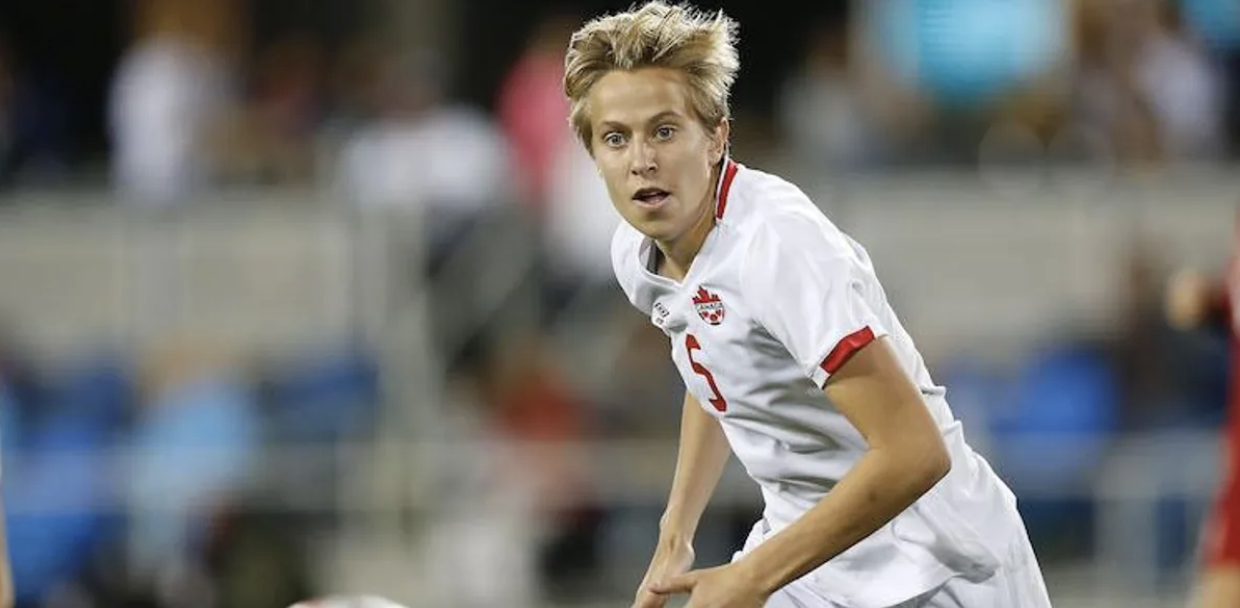
Quinn’s place in Canadian sport cannot be reduced to one ceremonial night, one Pride campaign or one social media moment. Their career matters because the performance came first, and the visibility followed inside the pressure of elite football. That order is important.
For many Canadian fans, the match-day ecosystem now stretches from supporter podcasts and tactical clips to commercial context such as the BetLabel Canada review, but Quinn’s story asks for a more grounded lens. The stronger question is not how sport talks about inclusion once a year. It is whether systems can recognize, protect and develop athletes whose identities do not fit old assumptions.
Quinn, a Toronto-born midfielder, has lived that question at the highest level of Canadian soccer. They have won Olympic bronze and gold, played in multiple World Cup cycles, passed 100 senior appearances for Canada and become one of the most visible trans and non-binary athletes in global team sport. Their career offers a useful case study in what real inclusion looks like when the athlete is not a symbol placed beside the game, but a footballer shaping it from midfield.
Why Quinn’s visibility lands differently
Visibility in sport is often presented as a clean success story. An athlete comes out, gets applauded, appears in campaigns and becomes a shorthand for progress. That framing is too simple for Quinn because it misses the work that made their visibility durable.
They were not introduced to Canadian soccer as a public figure first. Quinn entered the national pathway as a young player, came through youth teams and grew into a senior midfielder trusted in demanding tournament environments. Their identity is part of the story, but it does not replace the football reasons they kept being selected.
That distinction matters for young 2SLGBTQ+ athletes. Representation is strongest when it is tied to competence, role clarity and respect inside the team. Quinn’s presence says something more useful than “you can be seen.” It says you can be seen while competing, adapting and being evaluated seriously.
What did Canada get on the pitch?
Quinn’s game has rarely been about spectacle. They are not the player most associated with the final pass or the highlight finish. Their value sits in balance, pressure management, defensive positioning and keeping possession moving when matches tighten.
In tournament football, those qualities carry weight. Canada’s Olympic gold at Tokyo 2020 was built on collective discipline, defensive resilience and the ability to survive tense, narrow matches. Quinn appeared throughout that run and started in decisive knockout games, including the final, which tells its own story about trust.
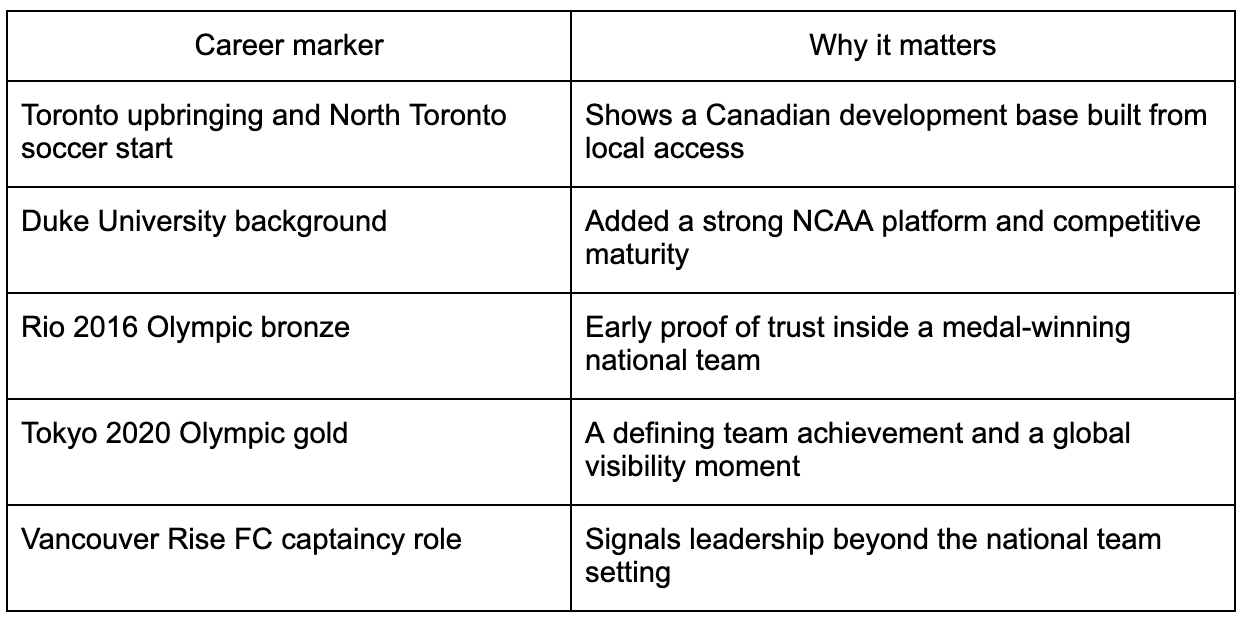
The table shows why Quinn’s impact cannot be measured only by identity milestones. Their career has been built through multiple layers of performance credibility, from youth development to international finals and professional leadership.
Why the “first” label is powerful, but incomplete
Quinn made history as the first openly transgender and non-binary person to win an Olympic medal. That fact is significant because firsts create language for moments that sport has often ignored. They make institutions, broadcasters and fans name realities that were previously treated as invisible.
Still, the “first” label has limits. It can freeze an athlete in one moment and make every later conversation about identity rather than craft. For Quinn, that can flatten a career that includes long-term national team service, tactical evolution and leadership inside a changing Canadian soccer landscape.
A better reading is to treat the first as a doorway, not the whole room. The milestone matters because it opened public space. What gives it weight is that Quinn kept playing, kept earning minutes and kept existing inside elite sport without letting the public frame define the full athletic profile.
What does Quinn’s pathway teach Canadian sport?
Quinn’s career is useful because it connects visibility to infrastructure. Canadian sport cannot rely on a few brave athletes to carry inclusion alone. If the system wants more players to stay in sport, it needs better day-to-day conditions, not just better slogans.
That is especially relevant because 2SLGBTQ+ participants still face barriers in sport environments. The issue is not only whether a national team athlete can be celebrated after success. It is whether a teenager in a local club, school team or community league can train without being made to feel unsafe, mocked or isolated.
Several practical lessons stand out:
Coaches need language and policies before a crisis happens.
Teammates shape culture through ordinary daily behaviour.
Facilities, travel and locker-room arrangements should be planned with dignity in mind.
Media coverage should discuss identity accurately without reducing the athlete to it.
Leadership roles for 2SLGBTQ+ athletes should be normalized, not treated as exceptional.
That is where Quinn’s story has value beyond soccer. It turns inclusion from an abstract principle into a performance question. Athletes are more likely to develop when the environment lets them focus on the sport.
How did the Canadian soccer context change around them?
Canadian women’s soccer has changed dramatically during Quinn’s senior career. The national team moved from respected contender to Olympic champion, and Canada now has a professional domestic women’s league with clubs across the country. That matters because visibility needs places to land.
When Quinn joined Vancouver Rise FC, the move connected one of Canada’s most recognizable players with a new domestic platform. Their later captaincy role gave the story another layer. Instead of visibility existing only in international tournaments, it became part of a Canadian club environment that young fans could actually see more regularly.
This local visibility is different from Olympic visibility. The Olympics create a national moment, but a domestic league creates repetition. It lets supporters watch leadership week after week, not just in a medal match every few years.
Why does the wording matter?
Writing about Quinn requires precision. They are trans and non-binary, and they use they/them pronouns. That is not a stylistic detail. It is basic accuracy.
It is also important not to collapse gender identity into sexual orientation. Canadian sport includes gay, lesbian, bisexual, trans, queer, non-binary and Two-Spirit athletes, but those terms do not all mean the same thing. Careful language helps readers understand the difference without turning the article into a glossary.
This is part of E-E-A-T in sports writing. Expertise is not only about knowing formations, caps and medals. It is also about describing people correctly, avoiding lazy labels and keeping the athlete’s sporting reality at the centre.
What should readers take from Quinn’s rise?
Quinn’s story is not a neat lesson that sport has solved inclusion. It has not. Barriers remain in youth sport, community sport, media treatment and policy debates. But their career does show what becomes possible when an athlete is able to remain inside the system long enough to grow.
The most important takeaway is that visibility should not be treated as a substitute for opportunity. Quinn became a landmark figure because they were also a trusted midfielder, a medal-winning international and a leader in professional football. Their identity matters, but so does the fact that they kept meeting the demands of the game.
That is the deeper legacy. Not a rainbow graphic beside a fixture list. Not a one-off quote during Pride month. A player on the pitch, reading pressure, covering space, leading teammates and making Canadian sport harder to imagine without them.
Please play responsibly. The 2SLGBTQiA+ community is known to be at higher risk for gambling-related harm due to a range of social and economic factors. If you or someone you know is struggling with gambling, there are support services available in British Columbia. Contact the BC Gambling Support Line at 1-888-795-6111, available 24/7, or visit www.bcresponsiblegambling.ca for confidential help, information, and free counselling