
Superstitions have shaped human behaviour across games of chance for generations. From historical rituals to personal routines, players rely on symbolic practices to invite good fortune or ward off bad luck at the table. Whether at a physical card table or an interactive digital gaming space, these habits reveal a deep psychological drive to find patterns in unpredictable environments. Let’s take a fun look at the Psychology of Superstition.
The Origin of Luck Rituals
Gambling traditions trace back to ancient civilizations where decisions were tied to spiritual signs. In early Roman and Greek societies, casting dice had close links to divine intervention. Players invoked specific gods or carried sacred charms to influence outcomes before rolling bones or wooden markers.
Over time, these beliefs evolved into everyday personal habits across cultures:
Physical Gestures: Crossing fingers, blowing on dice, or knocking on wood before a pivotal roll.
Color Symbolism: Wearing red in many East Asian cultures to represent vitality, wealth, and energy.
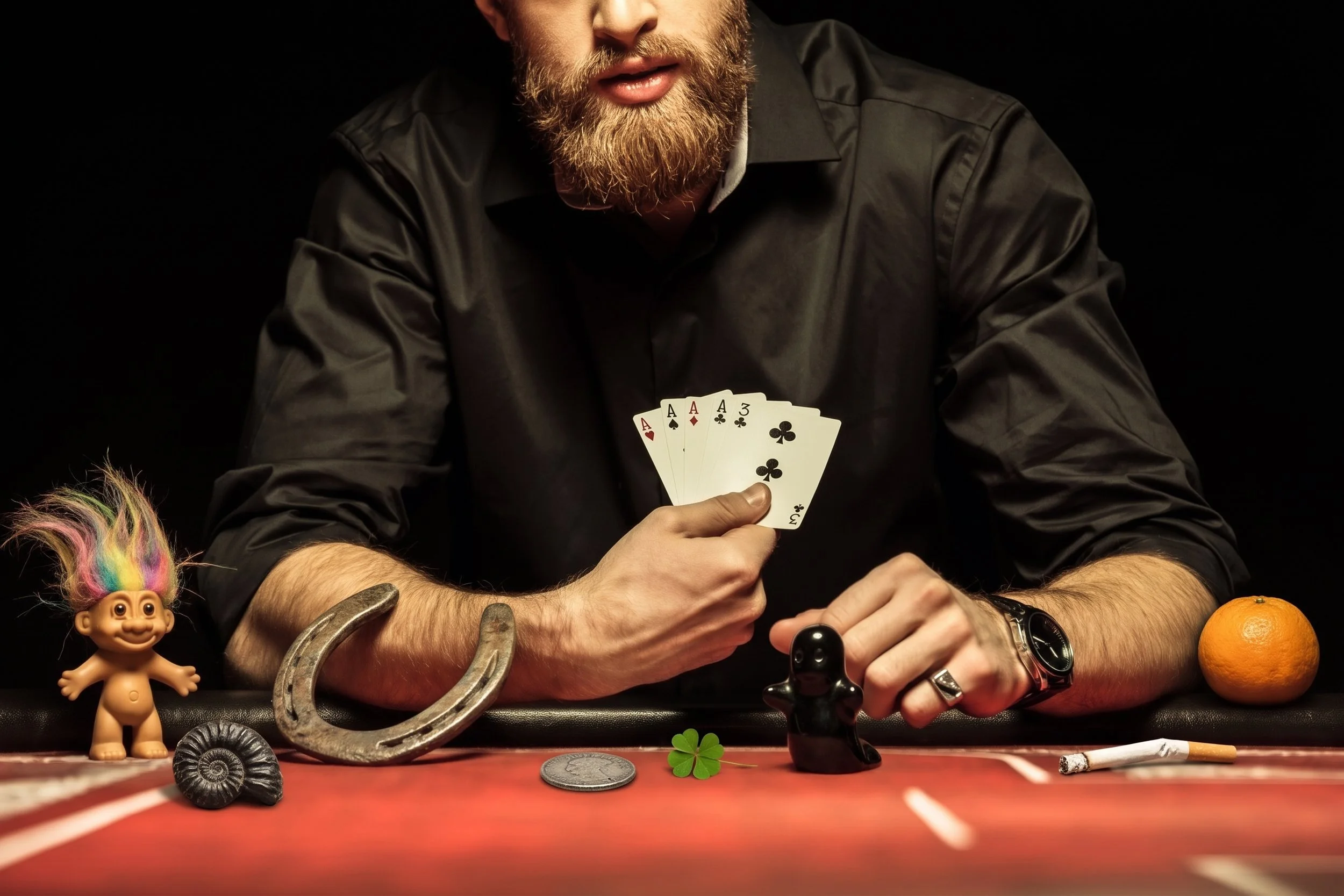
Lucky Objects: Carrying specific items, such as a horseshoe, a four-leaf clover, or a designated lucky coin. If you’ve ever played Bingo in a large Bingo Hall you’ll be very familiar with the lucky objects players place around their play area. Trolls anyone?
These actions give players a sense of personal control in environments defined strictly by randomness.
Many legendary poker figures are famous for bringing distinctive lucky charms and personal tokens to the table: World Series of Poker champion Johnny Chan famously carried a fresh orange beside his chip stack after his back-to-back Main Event wins in 1987 and 1988, converting a habit that originally masked casino cigarette smoke into his signature lucky icon. Doyle Brunson kept a small black-onyx card protector named "Casper" featuring Casper the Ghost, which was so revered for its luck that he regularly rented it to fellow competitors for hundreds of dollars an hour. Sammy Farha famously kept an unlit cigarette in his mouth as a psychological talisman despite being a non-smoker, a habit he solidified after finishing as the runner-up in the 2003 WSOP Main Event. And 2004 WSOP champion Greg "Fossilman" Raymer gained his nickname by using genuine prehistoric fossils as card protectors to safeguard his hands and invite good fortune during high-stakes play.
Common Myths in Gaming Culture
Certain superstitions remain deeply embedded in physical gaming venues. Many establishments intentionally omit the 13th floor or the number 4 (which sounds like the word for death in several East Asian languages) from room numbering and floor plans to respect long-standing cultural beliefs.
Players frequently adhere to specific behaviors during gameplay:
Avoiding Unlucky Actions: Refusing to count money while sitting at a table or avoiding entering a venue through the main entrance.
Table Etiquette Habits: Stacking chips in specific geometric patterns, touching lucky charms before placing a wager, or holding cards with a particular hand.
Changing Seats: Moving to a new position at the table to reset a streak of bad luck.
Psychological Drivers of Superstitious Beliefs
Psychologists attribute these behaviors to a phenomenon called "illusion of control." When individuals face outcomes governed purely by probability, the brain naturally seeks patterns to mitigate feeling powerless. Performing a ritual creates a temporary feeling of predictability.
Operant Conditioning: If a player wears a specific shirt and wins a hand, the brain links the two events, reinforcing the habit.
Confirmation Bias: Players tend to remember the times a ritual worked and forget the times it failed, keeping the superstition alive over time.
Digital Platforms and Modern Practices
As gaming has expanded into digital spaces, superstitious behaviors have adapted seamlessly to modern screen-based interfaces. While online platforms rely on audited Random Number Generators (RNGs) to ensure strict math-based randomness, players still apply personal rituals to their digital experiences.
Digital gaming enthusiasts often maintain fixed routines before launching a session:
Logging in at specific times of the day or night to match perceived lucky windows.
Using personalized digital avatars or specific hardware setups.
If you have your own set of strategies, you might want to test them across popular Canadian online casino sites before participating in live dealer interactions.
Inclusivity and Diverse Communities in Gaming Spaces
Modern leisure spaces, both physical and digital, continue to evolve toward broader inclusivity. Members of the 2SLGBTQIA+ community have historically formed unique social spaces for recreation, creating welcoming environments free from traditional societal barriers. Inclusive gaming groups and community social nights offer places where identity is affirmed, allowing individuals to engage in entertainment with authentic self-expression.
Whether offline or online, superstitions remain a central part of how players engage with risk, probability, and games of chance across every cultural background.