
SoundCloud 2026: Hard Techno and Dubstep Growth

Why Hard Techno and Dubstep Are Outrunning Polished Pop on SoundCloud
Polished pop often moves too slowly for SoundCloud's most impatient listeners.A bedroom producer does not need a label roll-out to learn from that gap. For artists already getting DJ reposts, private comments, and repeat plays from a real circle, buy SoundCloud plays can widen exposure around an existing scene signal, not create credibility from nothing.
The Signal Is Scene Density
The 2026 SoundCloud trend conversation has centered on hard techno and dubstep because both showed up as fast movers, including in a fastest-growing genre report that named them among the platform's strongest categories. The useful question is not whether abrasive bass or higher BPM is suddenly more marketable than pop. The sharper read is that these styles already operate through compact listening communities where producers, DJs, and fans pass tracks around before they are fully polished.That matters because SoundCloud rewards activity that looks like discovery, not just consumption. A clean pop single can be good and still feel finished, closed, and hard to alter. A hard techno tool or dubstep sketch often invites a DJ to test it, a producer to flip it, or a listener to repost it with a timestamped comment about the second drop.
Reposts Beat Polish
Repost networks are the first mechanism most pop-minded creators underestimate. On SoundCloud, a repost from a respected niche account can act like a handoff between small rooms of listeners who already share taste, tempo, and reference points. The play count is only one visible outcome; the better signal is whether the same five to 20 accounts keep appearing around related uploads.I keep seeing artists chase general playlists before they have earned two reliable peer circles. That order is backwards for scene-led genres. If your track gets reposted by a DJ who plays illegal warehouse sets, a producer who runs a monthly edit dump, and a fan page that posts 140 BPM clips, you have a map of where the record actually belongs.Track which reposts bring comments, not just plays.Notice whether listeners mention DJs, mixes, clubs, or other producers.Save the accounts that repost related records within 48 hours.Ignore vanity repost chains that share every genre without context.
DJ Utility Changes Release Math
Hard techno and dubstep travel fast because many uploads have a job outside passive listening. A DJ can use a long intro, a nasty second drop, a clean 16-bar outro, or a bootleg vocal edit within hours of finding it. That makes the platform closer to a working crate than a finished catalog, and the audience behaves accordingly.Coverage of the 2026 report also notes electronic music's larger role in the platform's growth cycle, as seen in this electronic growth analysis . The practical implication for a beginner is simple: if your track gives another creator something to do, it has more paths to spread. Pop often depends on repeat emotional attachment, while club and bass records can move through function first.Release decisions should reflect that use case. Upload a club mix before the radio edit if DJs are the likely carriers. Put the BPM and version type in the title when it helps selectors move quickly. Keep private links ready for people who ask for a WAV, because that request can be more valuable than a vague compliment.
Rough Drafts Have Value
The roughness is not a flaw when the audience enjoys hearing ideas mutate. Dubstep has a long habit of VIP versions, plate culture, switch-ups, and producer-to-producer one-upmanship. Hard techno has a similar appetite for tools, edits, distorted kicks, and stripped arrangements that work better in a set than in a glossy campaign.A 2026 report breakdown connects SoundCloud's current growth story to electronic music behavior rather than only genre labels. That distinction is crucial. The winners are not simply the loudest records; they are uploads that fit an exchange system where unfinished energy, remix permission, and DJ testing create repeated reasons to return.Bedroom producers can copy the mechanism without copying the sound. A hyperpop vocalist, phonk maker, Jersey club editor, or ambient beatmaker can ask the same question: does my micro-scene have accounts that hunt early material, reshape it, and pass it along with context?
Test Your Micro-Scene
Do not judge SoundCloud-native potential by genre name alone. Judge it by observable circulation. A small circle with clear behavior beats a broad audience that only clicks once and disappears.
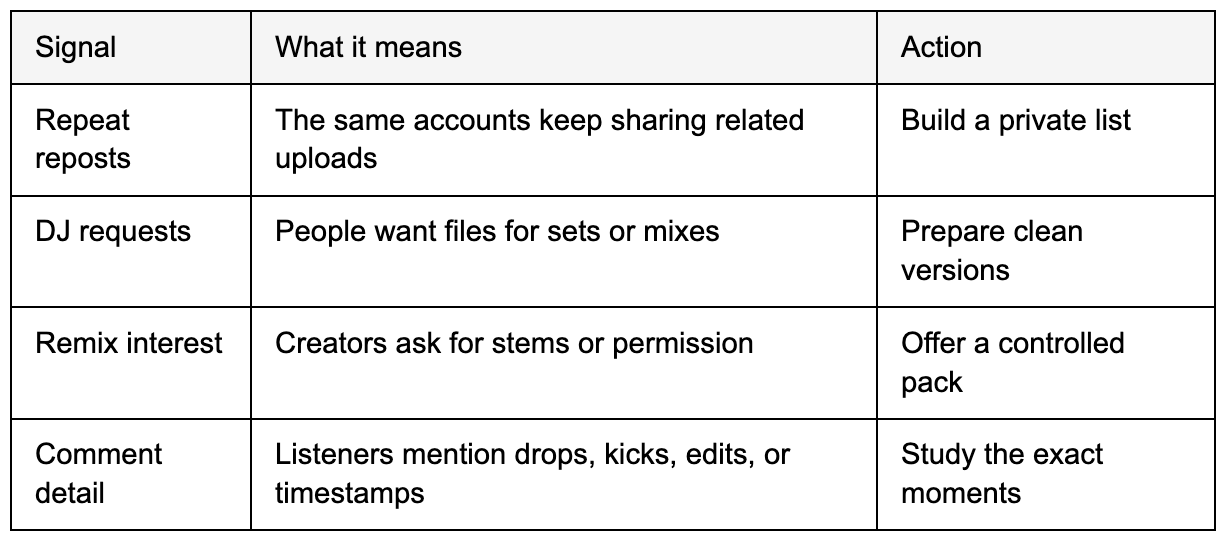
One small team I worked with tried promoting a bass track like a pop single, with cover art, a teaser, and a release-day post. Nothing unusual happened until they sent the private link to six DJs who already played adjacent sounds. Three reposts, two set clips, and one unofficial edit created more momentum than the public launch.
The named genres will change after 2026, because platform taste always rotates. The durable lesson is that SoundCloud still favors music with circulation mechanics built into the community around it. Before chasing a bigger audience, find out whether your track gives the right small group a reason to move it.