
Vancouver Queer Film Festival 2026: How “A Seat at the Table” Is Putting Belonging and Community in Focus
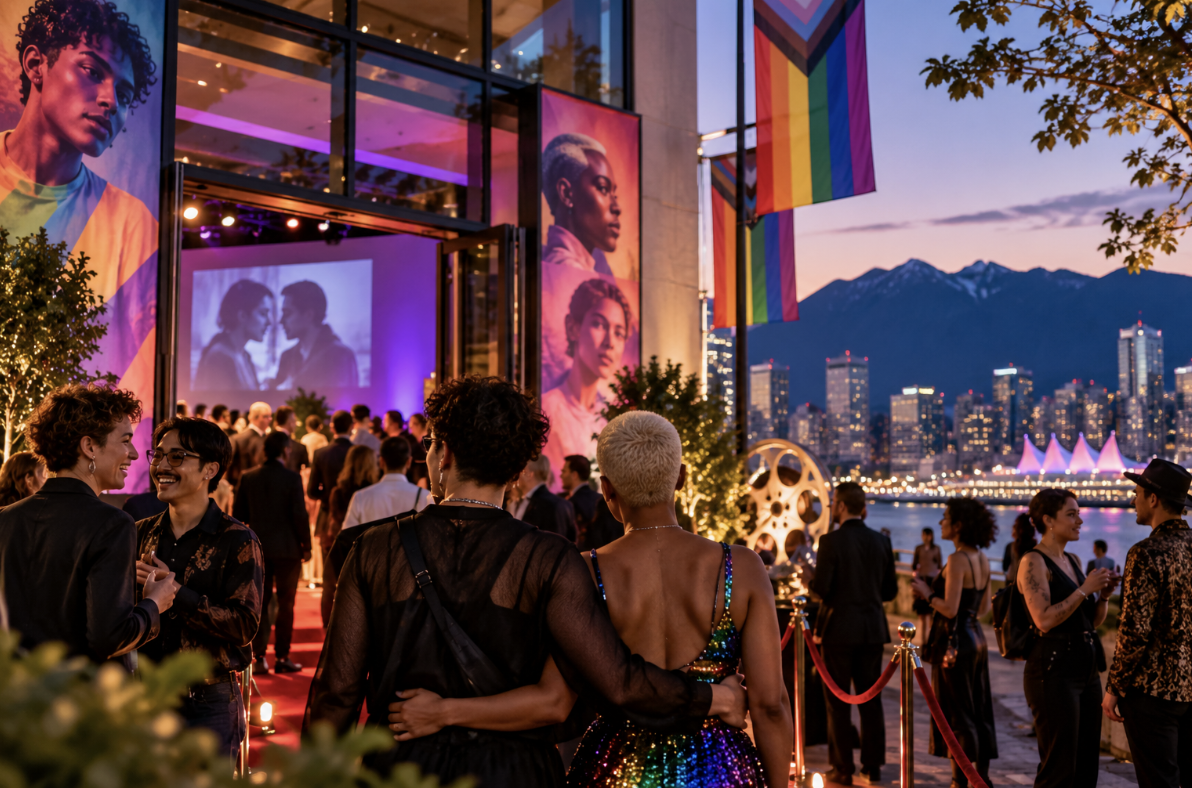
The Vancouver Queer Film Festival returns for its 38th edition in September 2026 with a theme that places participation, belonging, and shared cultural space at the centre of its programme. “A Seat at the Table” shapes an edition that brings 87 feature-length and short films by 2SLGBTQIA+ creators to Vancouver. The festival runs in theatres from September 10 to 20, followed by an online programme from September 21 to 27. Alongside screenings, audiences can attend filmmaker Q&As, workshops, parties, and community events.
Film festivals also exist within a much wider entertainment routine. Audiences now move between cinema, streaming, social media, podcasts, and online games during their free time. Interactive formats range from casual games to adult casino-style entertainment, including formats such as live casino, where players interact with games through real-time video. Searches for the best online сasino belong to that broader digital category. VQFF takes a different approach to screen-based entertainment: it creates a scheduled cultural event where films lead to discussion and face-to-face interaction.
The 2026 edition uses that social function as a central idea. “A Seat at the Table” asks who participates in queer cultural spaces, whose experiences appear on screen, and how audiences can take part rather than simply watch. The festival’s creative concept grew from artwork by Vancouver-based Black queer artists Odera Igbokwe and Tolu Ayoka. Their work connects gathering, memory, ancestry, celebration, and queer futures.
A Theme Built Around Participation
“A Seat at the Table” works on several levels. At its most direct, the idea refers to having a place within a group. Within a film festival, however, that question extends to filmmakers, programmers, audiences, local communities, and the people whose experiences appear in cinema.
The festival’s creative material presents a communal feast beneath a night sky. Figures gather around it, while mirrored figures underneath support the table. Igbokwe and Ayoka use this arrangement to connect present-day queer life with ancestral knowledge and collective memory. Food, storytelling, care, and gathering all contribute to the concept. That visual idea gives the festival a clear framework. VQFF does not treat belonging as an abstract slogan. Its programme asks audiences to consider who creates cultural spaces and who gets to participate in them.
This approach also fits the social nature of cinema. People can watch films alone at home, but a festival changes the context. Viewers enter a shared room, experience the same work at the same time, and may discuss it afterward with filmmakers or other audience members.
For VQFF, that communal setting forms part of the programme itself.
87 Films Give the Theme a Broad Screen Presence
The 2026 programme contains 87 films from around the world. The lineup includes nine world premieres, five international premieres, eight North American premieres, and 25 Canadian premieres.
Those numbers matter because “A Seat at the Table” requires more than a visual identity. The films need to support the idea through the experiences and perspectives they present.
VQFF has structured its programme around features, documentaries, short-film collections, regional work, and special presentations. The format allows audiences to encounter stories that address family, gender, relationships, care, identity, memory, ageing, community, and queer futures from different positions.
Three presentations help define the 2026 edition:
Ecosystems Not Empires opens the festival with seven short films focused on care, kinship, and collective liberation.
Apolo serves as the Centrepiece Presentation and follows Brazilian trans couple Isis Broken and Lourenzo Gabriel as they deal with an unexpected pregnancy.
Gugu’s World closes the festival with the story of a young queer boy caring for his grandmother as she begins experiencing Alzheimer’s.
The three selections approach community through different relationships. One uses a collection of short works to examine shared futures. Another focuses closely on a couple and parenthood. The closing film looks at care across generations.
Together, they show how the festival connects its theme to everyday relationships rather than limiting it to political language.
Opening Night Sets the Direction
Opening presentations carry particular weight at festivals because they introduce the programme’s priorities.
VQFF begins its 2026 edition with Ecosystems Not Empires. Instead of choosing one feature film, organizers selected a seven-film shorts programme. The collection explores queer futures through care, kinship, and collective liberation.
That choice aligns closely with “A Seat at the Table.”
A shorts collection can place several filmmakers and approaches within one screening. Each work retains its own identity, while the programme creates connections between them. Audiences encounter several perspectives during the same event rather than following one narrative for the entire evening.
It also makes the opening presentation itself an example of shared cultural space. Several creators contribute to the first major screening, and the audience receives a group of stories rather than one statement intended to represent everyone.
That distinction matters for queer cinema. No single film can represent the experiences of every 2SLGBTQIA+ person. A festival can instead create room for disagreement, contrast, humour, intimacy, politics, family stories, and personal accounts.
“Apolo” Brings Family and Parenthood Into the Discussion
The Centrepiece Presentation, Apolo, moves the festival’s theme into a more intimate setting.
The documentary follows Brazilian trans couple Isis Broken and Lourenzo Gabriel as they face an unexpected pregnancy. VQFF plans a special Q&A after the screening, extending the event beyond the film itself.
The subject connects belonging with questions of family, partnership, gender, and parenthood. It also shows why the festival format matters.
A viewer could watch a documentary and leave with private reactions. A post-screening conversation creates another stage in the experience. Audiences can hear context, consider the filmmakers’ choices, and discuss questions that the work raises.
VQFF includes Q&As and workshops throughout its run, so this model appears across the wider event rather than in one isolated screening.
That interaction supports the central theme. A seat at a screening matters, but a chance to participate in the discussion gives the phrase another meaning.
The Closing Film Turns Toward Intergenerational Care
Gugu’s World brings the festival to a close with a story centered on a young queer boy and his grandmother.
As she begins experiencing Alzheimer’s, he secretly tries to care for her. The premise moves attention toward family bonds, responsibility, ageing, and the relationship between generations.
That intergenerational element connects directly with the festival artwork.
The visual concept behind “A Seat at the Table” does not separate queer futures from earlier generations. Instead, it places past, present, and future within the same creative framework. The figures supporting the table represent ancestral foundations, while those gathered above occupy a shared contemporary space.
Ending with a film about a younger and older family member therefore gives the festival a fitting final perspective. It asks audiences to think about belonging not only in relation to peers but also through age, memory, responsibility, and family.
Local Filmmakers Keep Vancouver in the Programme
An international film festival still needs a meaningful connection with its home city and province.
VQFF maintains that connection through The Coast Is Queer, which returns for its 26th year in 2026. The shorts programme has featured 2SLGBTQIA+ filmmaking from British Columbia since 2000 and includes documentary, animation, drama, and experimental work.
B.C. creators also appear elsewhere across the festival. Coverage of the 2026 edition identifies 11 short films from the province within this year’s programming.
Local work serves several purposes. It gives Vancouver audiences stories connected to places and communities they know. It also places emerging regional filmmakers within the same festival framework as international creators.
That relationship between local and global cinema supports the theme without requiring every film to address belonging in the same way.
Community can mean a neighbourhood, a family, a cultural group, an artistic network, a generation, or connections that cross national borders. The programme allows those definitions to coexist.
Events Turn Screenings Into Social Spaces
VQFF does not limit the 2026 edition to film screenings.
The schedule includes filmmaker Q&As, workshops, parties, and other community activities. These events change the relationship between audiences and the festival.
A conventional cinema visit follows a simple structure: arrive, watch a film, leave. A festival can add conversations before and after the screening. Viewers may meet filmmakers, attend another event with people they encountered earlier, or discuss a film long after its credits end.
For a programme built around belonging, these activities carry practical significance.
They give attendees several ways to participate. Someone who prefers discussion can attend a Q&A. A filmmaker may use a workshop to exchange knowledge with peers. A party creates an informal social setting. A shorts programme can introduce audiences to creators whose work they have never encountered.
The festival therefore treats community as something people do, not simply something films depict.
Online Screenings Extend Access Beyond Vancouver Theatres
The physical festival runs from September 10 through September 20. VQFF then moves into its streaming period from September 21 through September 27.
That hybrid structure matters when discussing participation.
Not every viewer can attend a Vancouver theatre. Geography, schedules, mobility, work, health, and other circumstances can affect attendance. Streaming gives eligible audiences another way to engage with part of the programme.
Digital viewing cannot reproduce every part of an in-person festival. It does not place hundreds of people in the same auditorium, and it changes the social context around a screening. At the same time, online access can bring films to people who would otherwise miss them.
The two formats therefore serve different needs.
VQFF’s schedule recognizes that cultural participation does not require one single method. The theatre remains central to the event, while the online programme extends its reach after the physical screenings finish.
Accessibility Also Shapes Belonging
A festival cannot talk seriously about participation without considering practical access.
For 2026, VQFF uses sliding-scale ticket pricing. Current festival information lists options ranging from $7 to $19, with separate arrangements for special presentations and digital access.
The programme also states that selected films carry accessibility features, and festival information can help viewers determine which screenings meet their requirements.
Cost, venue access, captions, scheduling, and online availability may sound less dramatic than a festival theme, but these details affect whether people can actually participate.
“A Seat at the Table” gains meaning when organizers connect the idea to how audiences experience the event.
Queer Cinema as a Record of Community
The 2026 festival arrives after decades of queer filmmaking and exhibition in Vancouver. VQFF has operated since 1988, giving 2SLGBTQIA+ filmmakers and audiences a recurring cultural space for more than three decades.
That history gives this year’s theme additional context.
Queer representation on screen has changed considerably across that period. So have production methods, distribution channels, audience habits, and public discussions around gender and sexuality. Yet festivals still perform a function that streaming catalogues cannot fully reproduce: they select works, place them in conversation with one another, and gather people around them at a particular time.
The 2026 creative concept acknowledges history directly. Igbokwe and Ayoka connect current queer communities with ancestral foundations and future generations. That approach turns the festival into more than a collection of new films. It asks audiences to consider how present-day cultural spaces developed and who will shape them next.
A Festival Theme That Works Through Its Programme
“A Seat at the Table” could have remained a poster concept. VQFF instead carries the idea across its programming choices, opening and closing presentations, local filmmaking showcase, Q&As, workshops, social events, and hybrid schedule.
The numbers show the scale: 87 films, numerous premieres, eleven days of theatrical programming, and another week of online screenings. Yet scale alone does not explain the 2026 edition.
The central question concerns participation.
Who tells queer stories? Who watches them? Who joins the conversation afterward? How can a festival acknowledge previous generations while creating room for new filmmakers and audiences?
VQFF does not offer one answer. Its programme creates several settings in which people can consider those questions themselves.
That makes “A Seat at the Table” particularly suited to a film festival. Cinema supplies the stories, but screenings, conversations, workshops, and shared spaces determine how people encounter them.
From September 10 through 27, the Vancouver Queer Film Festival will use both theatres and online screenings to put that principle into practice. Its 38th edition places belonging at the centre not simply as a subject on screen, but as a question about who participates in queer cultural life and how communities make room for one another.
Please play responsibly. The 2SLGBTQiA+ community is known to be at higher risk for gambling-related harm due to a range of social and economic factors. If you or someone you know is struggling with gambling, there are support services available in British Columbia. Contact the BC Gambling Support Line at 1-888-795-6111, available 24/7, or visit www.bcresponsiblegambling.ca for confidential help, information, and free counselling