
From Whistler to the Kootenays: A Practical Guide to Queer-Welcoming Weekend Escapes in BC
Most people planning a weekend away in British Columbia open the same websites, look at the same options, and end up somewhere they have already been. That is not necessarily wrong — BC has a lot of places worth returning to. But if you are part of the 2SLGBTQIA+ community and you want to know which destinations outside Vancouver actually feel welcoming rather than merely tolerant, the information is scattered. This guide pulls it together.
The short version: BC is better than most provinces for queer travellers, even outside the major cities. The longer version is more interesting. There are places in this province — a ski town, a small city in the mountains, a stretch of Okanagan highway — where queer visitors have been showing up for years and where local infrastructure has grown around them. Finding those places before your next long weekend takes about twenty minutes of research, or you could spend that twenty minutes on something else entirely and come back to this when you have a plan. Either way, there is a reason queer Vancouverites drive six hours to Nelson for Labour Day weekend rather than staying home — and it is the same reason you occasionally spend a slow evening at Ringospin rather than going out: sometimes the best option is the one that was built with you in mind.
Whistler: An Annual Event That Built a Year-Round Reputation
Whistler is the easiest answer on this list, which is both a strength and a limitation. The Whistler Pride and Ski Festival — running each January since the early 1990s — has been drawing queer skiers and snowboarders from across North America for over three decades. What started as a small gathering of gay skiers in 1992 grew into one of the largest LGBTQ+ ski events on the continent, and the town itself absorbed that identity over time.
The practical result is that Whistler operates year-round as a town comfortable with queer visitors. Hotels, restaurants, and activity operators on Whistler Blackcomb have been catering to this crowd long enough that it registers as normal rather than notable. That matters when you are planning a trip — you are not wondering whether the inn you booked is going to be awkward about a same-sex couple, because the answer has been established over thirty years of tourism.
Outside of January, Whistler works well for summer hiking, mountain biking, and the village nightlife scene. The Sea to Sky Highway drive from Vancouver along Howe Sound is worth the trip on its own. Shannon Falls and the Squamish arts scene make good stopping points if you leave early in the day. Two hours from Vancouver, it is the simplest queer-friendly weekend from the Lower Mainland.
Nelson: The One That Surprises People
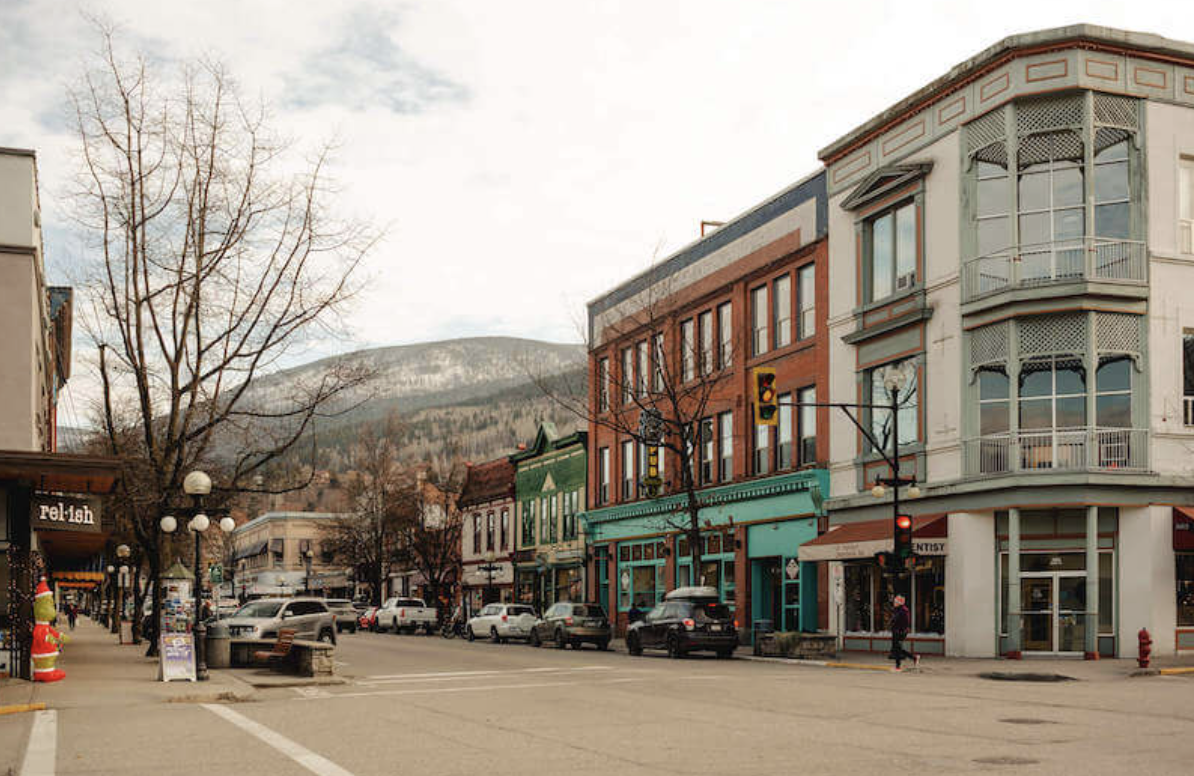
Nelson is a city of just over 10,000 people on the west arm of Kootenay Lake, about six hours east of Vancouver. On paper, that sounds like a long drive to a small town. In practice, Nelson has more queer infrastructure per capita than most cities ten times its size, and it has had that infrastructure for a long time.
The 1996 Nelson Pride parade was the first pride parade in North America to take place outside a major city. That is a specific, verifiable fact that tells you something about what the community there chose to build. Kootenay Pride now runs over Labour Day weekend as a week-long series of events including drag performances, queer musicians, and family activities. The town's restored heritage buildings on Baker Street house independent galleries, queer-owned coffee shops, and bookstores. The Bent On Art festival, a queer and trans arts festival launched in 2018, runs in the same period and extends the cultural programming beyond the parade itself.
The surrounding area adds practical reasons to make the drive. Ainsworth Hot Springs is forty minutes from Nelson. The Kootenay Lake Ferry — the longest free ferry in the world — connects the east and west shores and is worth taking just for the hour on the water. The town itself is walkable and the accommodation options include boutique stays in restored heritage buildings.
Here is a quick reference for the main queer-welcoming destinations covered in this guide:


The Okanagan: Less Obvious Than You Might Think
The Okanagan tends to register in queer travel conversations as an afterthought, sitting somewhere between Whistler and Nelson in terms of reputation. That is a bit unfair. Kelowna is four hours from Vancouver, and the region has grown a visible queer social scene over the past decade. The wineries, the lakes, and the hiking trails draw a broad crowd from the Lower Mainland every summer, and the LGBTQ+ community has come with them and put down roots.
The practical appeal here is different from Nelson or Whistler. This is not a destination built around a single annual event. It is a region where queer visitors blend into a generally progressive tourist culture and find space to be comfortable. The lake towns along Highway 97 — Osoyoos, Penticton, Kelowna — each have their own pace. Osoyoos runs a Pride Arts Festival in September, which adds a cultural anchor to what is otherwise a wine and outdoor recreation destination.
For a queer couple or group planning a summer weekend, the Okanagan offers the most flexibility on this list. You can spend a day on the water, visit a winery, hit a drag brunch in Kelowna, and spend the evening in accommodation that costs considerably less than Whistler in peak season. The trade-off is that it is less concentrated — you will not stumble into a queer-specific venue around every corner the way you might in Nelson during Pride week.
Golden and the Kootenay Rockies: The Longer Drive That Pays Off
Golden sits in the Columbia Valley, roughly seven and a half hours east of Vancouver, and it is not a queer destination in any programmatic sense. There is no annual pride event, no dedicated queer venue, and no established community infrastructure the way Nelson has it. What Golden has instead is something more diffuse and arguably more useful for a low-key weekend: a small mountain town where same-sex couples report feeling comfortable and where the tourism industry has actively tried to signal welcome.
The draw is the outdoor access. Golden sits between Yoho National Park and Glacier National Park, with Kicking Horse Mountain Resort on its doorstep. The Kicking Horse River runs through town and offers some of the best white-water rafting in BC. In winter, the ski terrain at Kicking Horse is among the most challenging in Canada. This is a destination for queer travellers who want the nature experience and are not specifically looking for queer social infrastructure — people who want to hike or ski in a place that will not make them feel out of place.
What to Actually Check Before You Go
The destinations in this guide vary significantly in what they offer. Before booking, it helps to ask a few practical questions:
Is there a specific queer event during your travel dates, or are you relying on general community welcome? Nelson and Whistler in peak season feel different from those same towns on a random Tuesday in November.
What is the drive time, and does the destination justify it on its own merits regardless of queer-specific infrastructure? Golden is a long way to go for a weekend unless the outdoor activities are the main draw.
Does your group want social nightlife, outdoor recreation, or a mix? The Okanagan and Whistler offer both; Nelson leans more toward arts and community; Golden is almost entirely outdoor-focused.
What time of year are you travelling? Some of these destinations are strongly seasonal. Kootenay Pride in Nelson is a Labour Day weekend event. Whistler Pride runs in January. The Okanagan works best from June through September.
Have you checked for current events? Drag nights, queer film screenings, and community socials pop up across BC in smaller towns throughout the year — checking local 2SLGBTQIA+ event calendars before your trip often reveals something worth timing your visit around.
BC is a province where a queer couple can drive in almost any direction from Vancouver and land somewhere reasonably comfortable. The destinations above go further than reasonably comfortable — they are places that have built genuine capacity for queer visitors, whether through decades of annual events, an arts community that has been organizing since the 1990s, or a tourism sector that has put in the effort to signal welcome clearly. Pick the one that fits your weekend and go.
Please play responsibly. The 2SLGBTQiA+ community is known to be at higher risk for gambling-related harm due to a range of social and economic factors. If you or someone you know is struggling with gambling, there are support services available in British Columbia. Contact the BC Gambling Support Line at 1-888-795-6111, available 24/7, or visit www.bcresponsiblegambling.ca for confidential help, information, and free counselling.